Transcending Trauma

Shadow and Light (Israel Reflections #1)

Heidi and I came to Israel this week with some particular goals. We wanted to be with as many of our friends and friends-who-are-like-family as possible, to do some volunteering and demonstrating, and to give away Tzedakah money to people and places that are making the society better. It’s not a vacation; Israel evokes deep feelings and I’ve been on shpilkes for much of my time here.

This has been a poignant week in Israel, a week of shadow and light.

First, the shadows.

I hope that by the time you read this we are not at war with Iran. This is a war-scarred and traumatized society; nearly two-and-a-half years since the terrorist massacres of October 7, it seemed as if some sort of equilibrium was, at least, within sight. Everyone seems to be going about their daily lives with some semblance of normality, but the emotions beneath the veneer are complicated.

Last July, Iranian missiles fell from the skies, sending people in the middle of the nights into their shelters and safe rooms. Everyone is geared up for that to happen again this week, as American carriers are in place in the Persian Gulf, the U.S. Air Force is conducting drills, and Iran is threatening to respond in kind on Israel.

I’ll admit I’m a little nervous about all this, but my Israeli friends have told me how to take precautions and prepare for an attack that seems like it’s coming.

Beyond that, Israelis are wrestling with a parallel dilemma as Americans: the assault on democratic institutions by a corrupt administration. The horrible situation of unchecked settler violence in the West Bank — as well as surging rates of intra-Arab violence — is at a boiling point here. So we joined, with thousands of others, the pro-democracy rallies and demonstrations that have been running perpetually for years. Everyone knows that the status quo can’t hold.

So of course there are shadows in Israel. But shadows don’t exist in unrelenting darkness, and we’ve also experienced an enormous amount of light.

The biggest story in Israel this week was—finally, 843 days after that cursed Oct. 7—the retrieval and return of Ron Gvili’s body from Gaza. For the first time in 12 years, there are no Israeli hostages, alive or dead, in the dungeons and tunnels of Gaza. Every Israeli is cognizant of this; everyone was aware of his funeral that took place this week. Ron Gvili was an Israeli hero, and his family had been desperately holding on to the slimmest hope that he was perhaps still alive. This week they received the closure of at least knowing his fate.

So the yellow and blue ribbons are coming down. The Hostages and Missing Families Forum / “Bring Them Home Now” organization held its final Kabbalat Shabbat service in Tel Aviv.  Synagogues no longer recite special prayers for the hostages. And I removed “Bring Them Home” from my email signature. People are finally trying to move forward and confront the long process of healing a traumatized generation.

Considering the trauma and the healing, there were two particular points of light that I want to share with you:

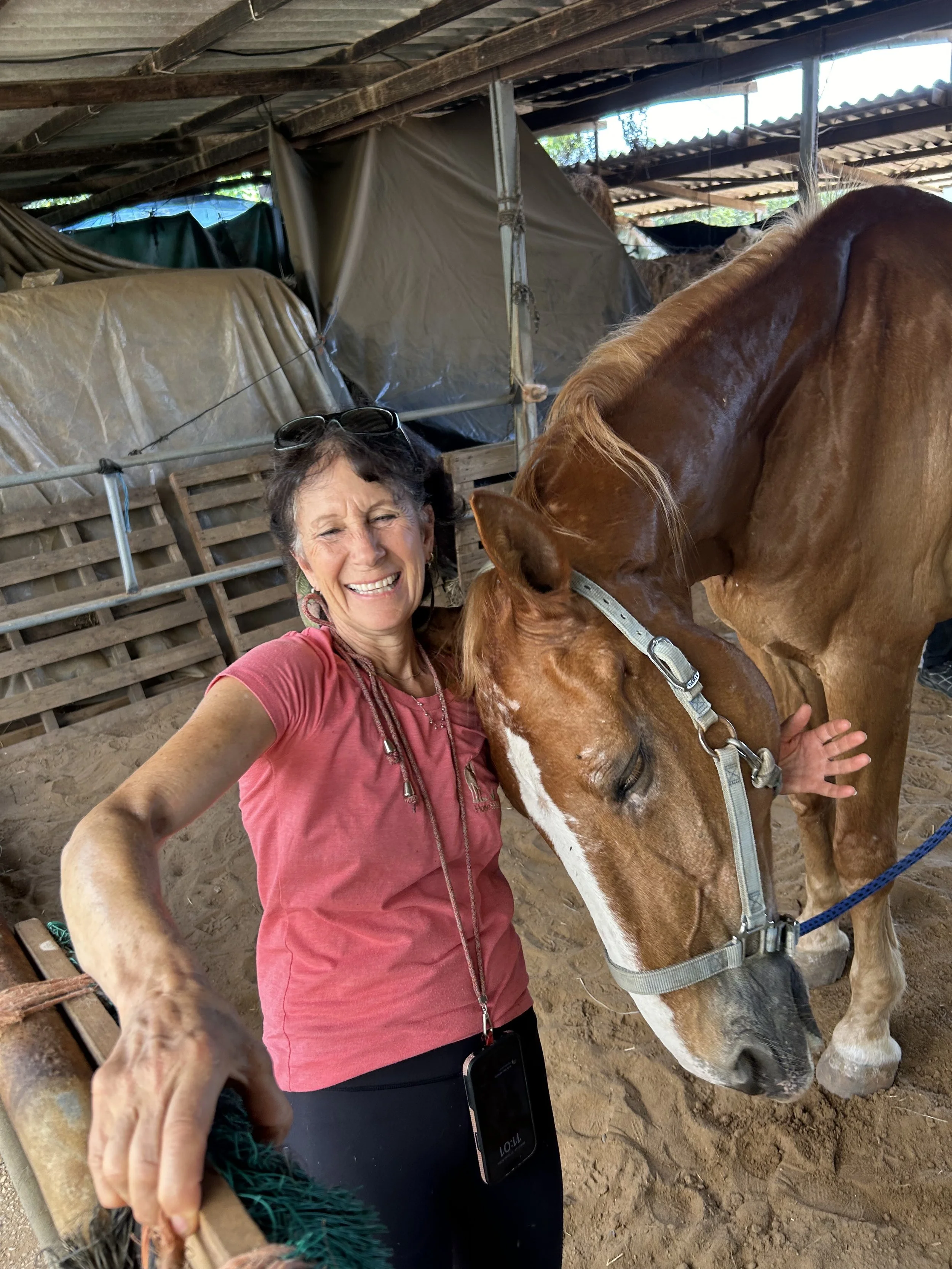
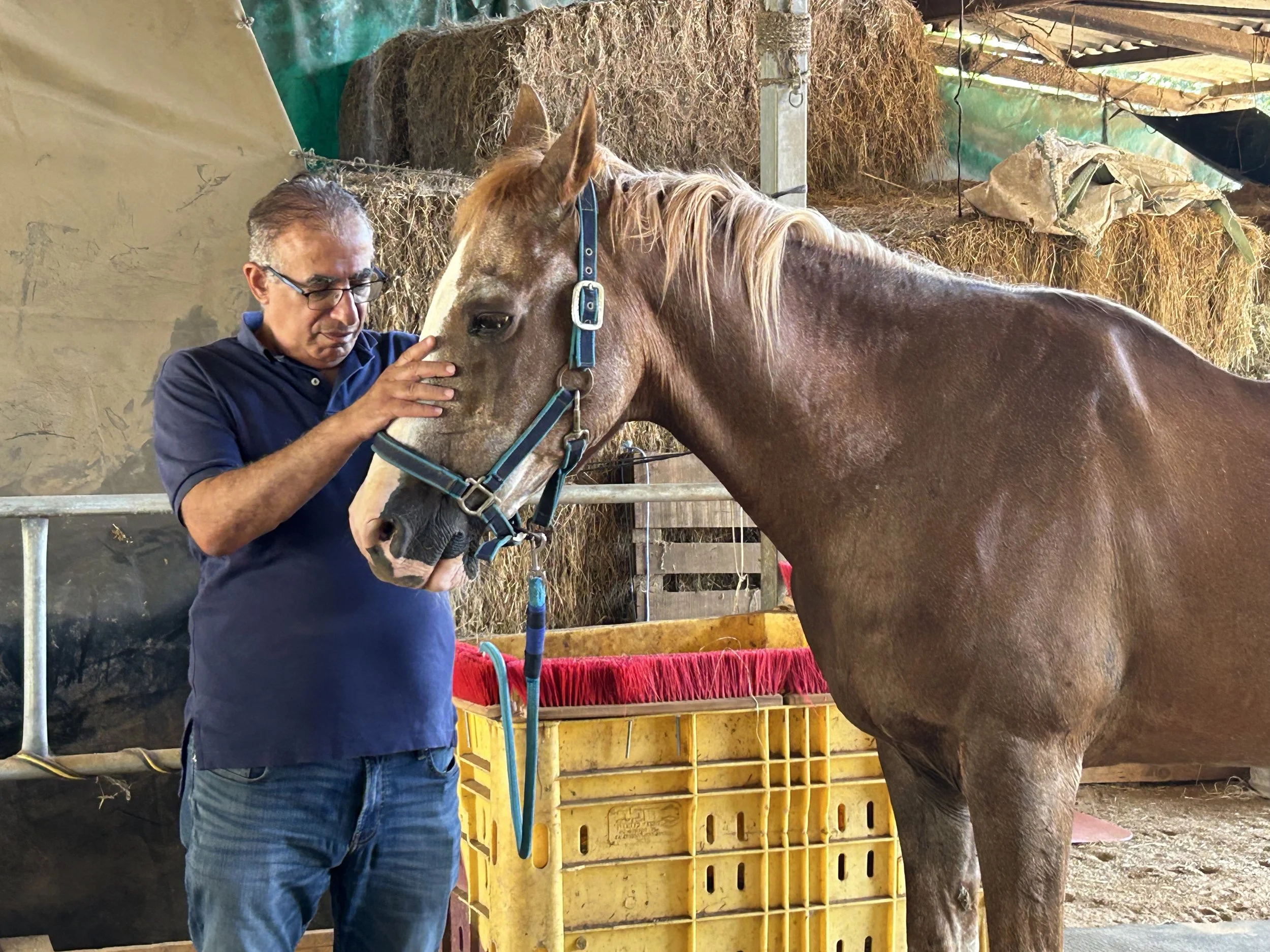
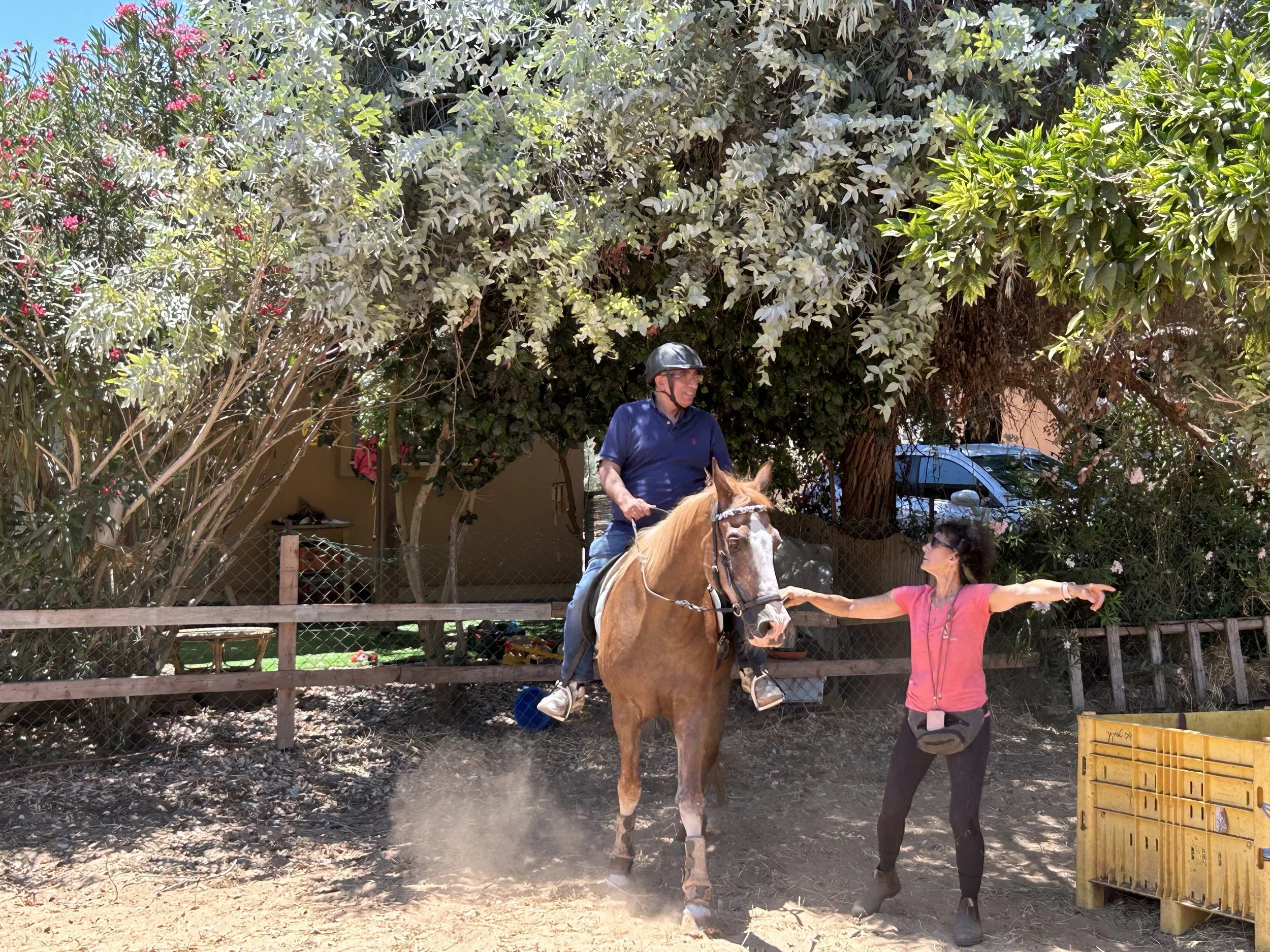
Transcending Trauma: We visited with my friend Anita Shkedi this week. I’ve written about Anita before; she is an internationally recognized authority on hippotherapy, using horses for physical and emotional therapy. But that’s just the tip of the iceberg. Anita’s most recent book is Horses Heal PTSD, and since Oct. 7 she and her Transcending Trauma team have been caring for survivors of the massacre and the IDF soldiers who have been in Gaza and elsewhere. How clearly can I say this? She puts shattered lives and bodies back together, teaching her clients the art of grooming and caring for and bonding with horses, and then the therapy that takes place on horseback. It’s awesome to be in her presence and to hear the stories of her people; it’s a great privilege to support her work through the Kavod Tzedakah Fund.
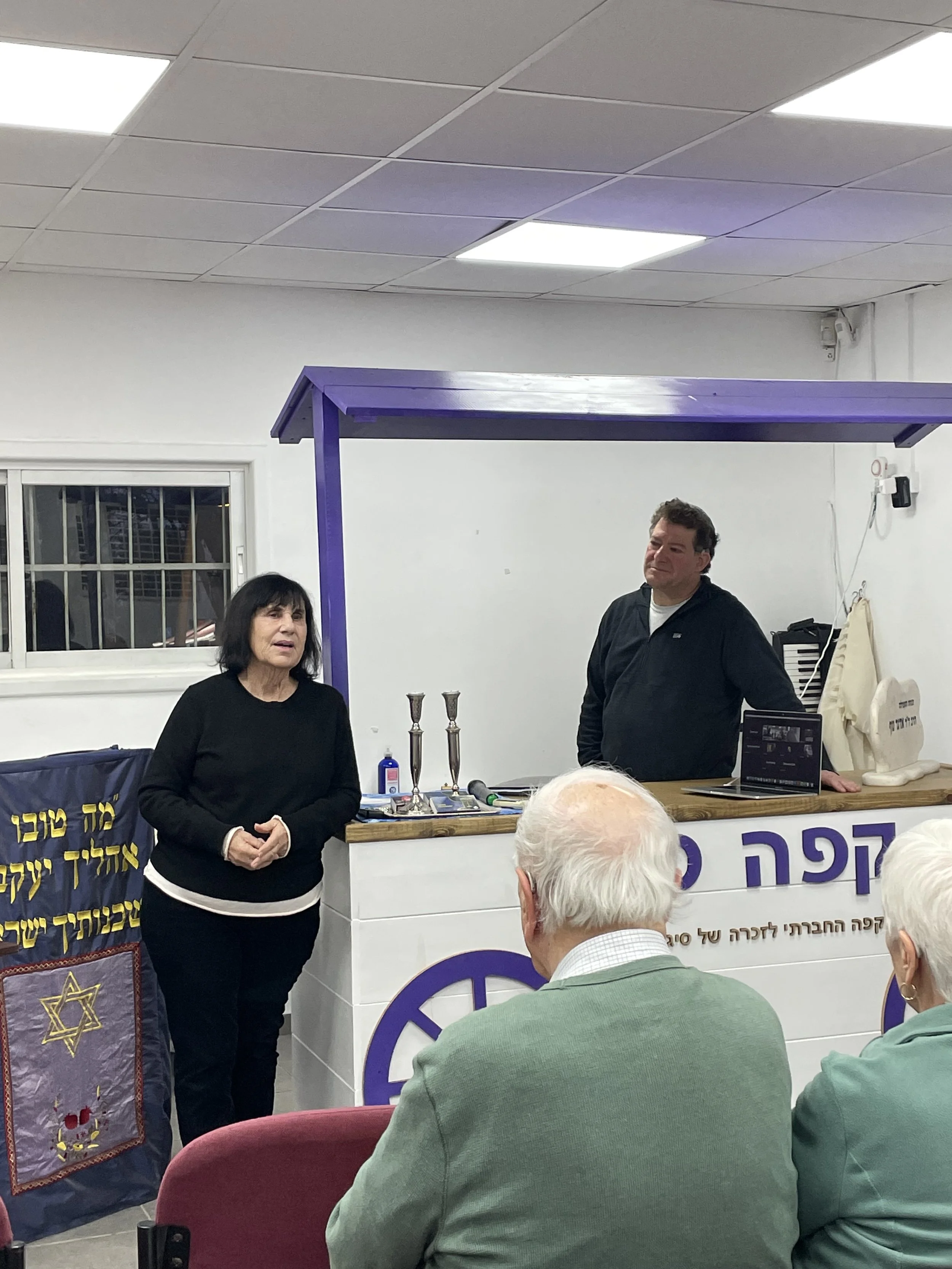
Neal and Anita Shkedi of Transcending Trauma teaching in Netanya, January 29, 2026

 Shai Tsabari with Avner Gadasi and Yehuda Keisar: Heidi and I did some volunteer work and spent time listening to a lot of Israeli stories over the past few days. By Wednesday night we were ready for a break, and I spotted that Israeli musician Shai Tsabari was performing with two of the most renowned Jewish Yemenite musicians of the generation, Avner Gadasi and Yehuda Keisar. Tsabari is of  the generation of Israeli rock stars whose music is a mixture of western (rock, dance, psychedelia) and eastern (Jewish piyyutim, and especially the melodies of Tsabari’s ancestry in Yemen). He’s also known for his engaging and soulful personality that draws people in and gets them up and dancing.
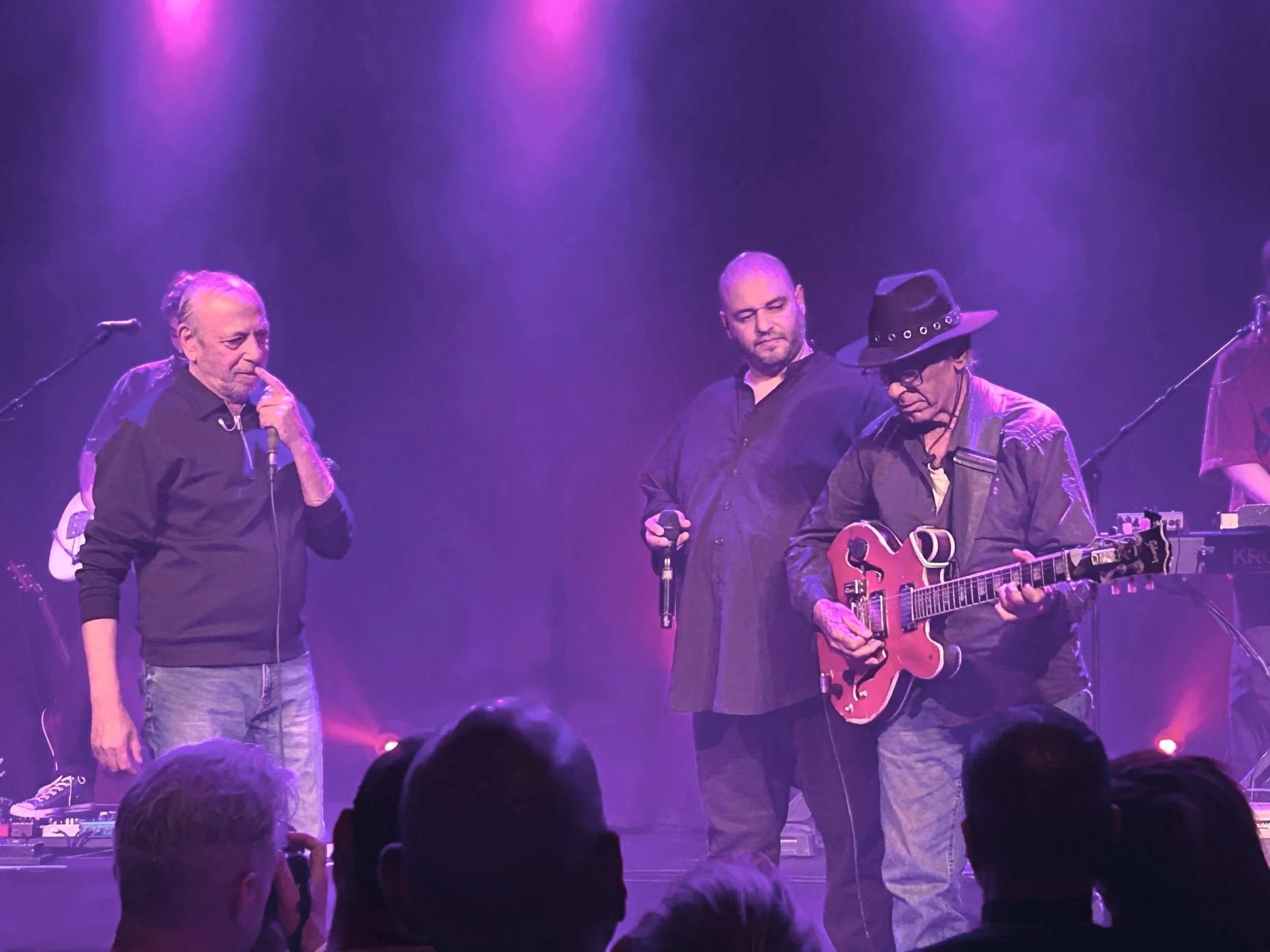
Avner Gadasi, Shai Tsabari, Yehuda Keisar (photo: NG)
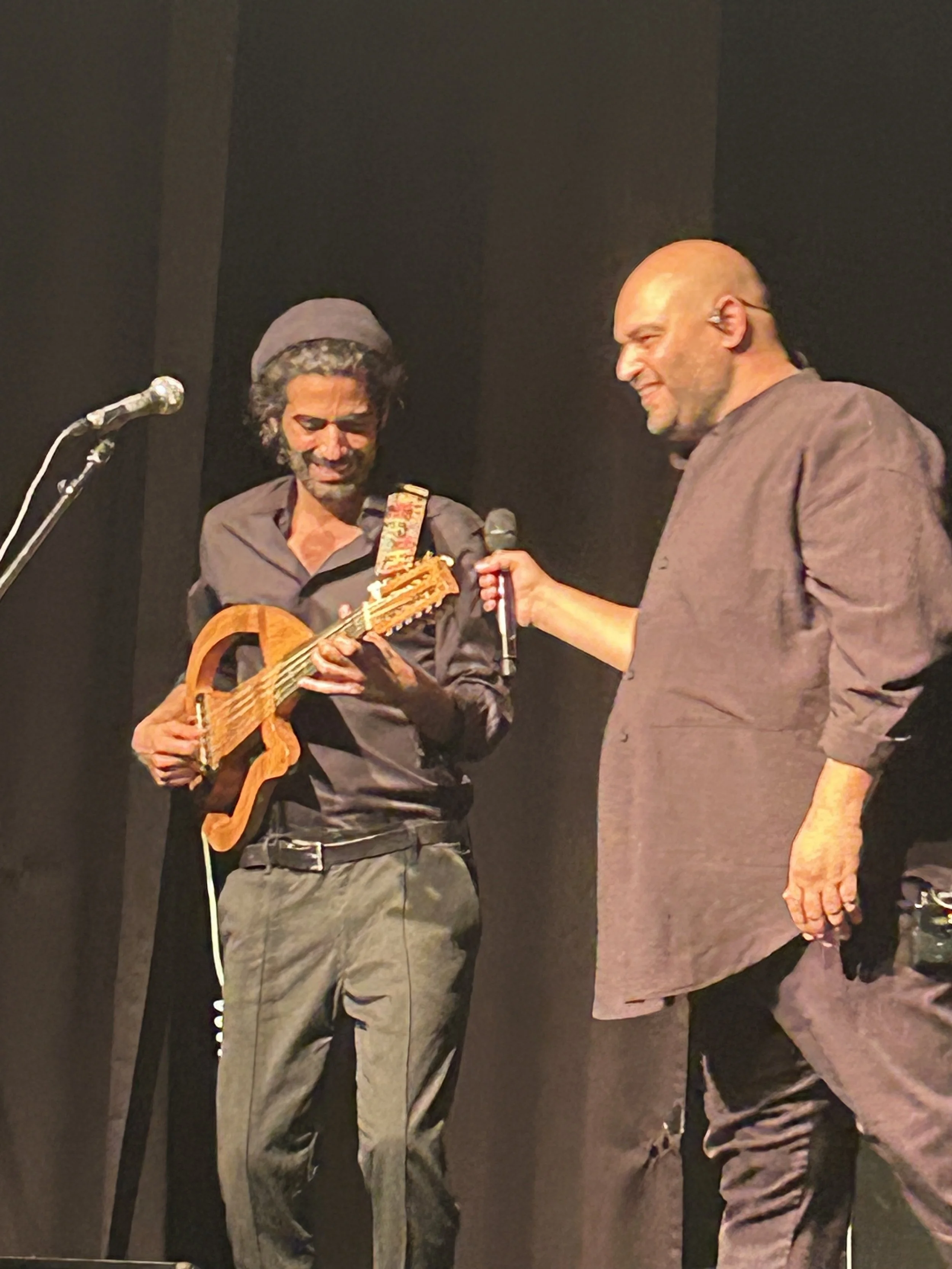
Shai Tsabari and a member of his band with a unique instrument (photo: NG)

I knew the concert would be fun—but I didn’t realize how deeply it would move me. The place was packed with Israelis, who by the second half of the show were on their feet, singing every word, and some dancing on chairs and tables. It struck me: here is a nation that has been so traumatized and so soaked in grief; a society that for the past two-and-a-half years could recite the name of every hostage. Tonight I felt a catharsis, a release, a transcendence that is reflected in the slogan “We Will Dance Again.”

It doesn’t mean that the next morning the nation won’t resume confronting its PTSD. But for one night, a few hundred of us were smiling, slapping hands, dancing to the old-new sounds of Jewish musicians, and realizing that there is an unspoken spirit that binds this people together in history and hope.

Transcending Trauma in Israel

Trauma is a brutal word. It’s not only the damage that occurs from physical or psychological wound; it’s also the wound that festers, long after the initial damage has been inflicted.

Israel is a traumatized nation this summer. On the surface, the cafés are occupied, the beaches are full, the tourists are touring, and so on. But the trauma is everywhere, barely beneath the surface. Even if every hostage were to return home tonight (amen!), and if Hamas were to surrender, and if Hezbollah were to cease raining missiles on the North—still it will take a generation to heal the trauma.

My friend—truly one of my heroes—Dr. Anita Shkedi is an authority on trauma, and earlier this week I went to observe the power of the therapeutic work she is doing.

I’ve known Anita for 30 years; she’s one of many Mitzvah-heroes I first met through Danny Siegel. She is a world-renowned expert on equine therapy (“therapeutic horseback riding”), which uses the holistic power of horses to heal broken bodies and broken spirits. In recent years, her attention has moved to healing trauma; her book Horses Heal PTSD: Walking New Paths is full of staggering stories of love and hope that should be read even by people who have never given horses more than a moment’s thought.

And then, October 7 and its aftermath: the massacres, the hostages, the horrors of war; the 125,000 Israelis from the Gaza envelope and the northern border who have been forced from their homes. The nation is grieving and writhing. In response, Anita and her team pivoted and created a new program: TRANSCENDING TRAUMA, “supporting individuals in the early, mid, and post stages of trauma, and then later if chronic PTSD has developed. It provides immediate intervention and treatment, builds resilience and encourages post traumatic growth. Transcending Trauma is an excellent way to regain a sense of trust and learn to manage this ongoing crisis.”

They’ve created groups from survivors of the Nova Festival. They’ve had groups of survivors from the kibbutzim that were devastated by the terrorists. Today, it’s a group of traumatized soldiers.

Anita Shkedi (left)

Nikki Kagan

I visited Anita and the team at “Piloni’s Place” on Moshav Hibbat Tzion, at the backyard horse farm of Nikki Kagan, a noted leadership consultant and horse expert. I met the group of eight participants who had gathered there for the day’s program:

·      A soldier who is the lone survivor of his unit of thirteen fighters. Can you imagine the trauma that he carries with him?

·      Another soldier whose job in Gaza is to recover the dead; to piece together pieces of bodies, give positive IDs, and get the bodies out of the combat zone to central command. Can you imagine…?

·      A young soldier from Westchester County, New York, who came to be in the army of the Jewish people…

·      And so on; five more people each of whom has seen death and destruction among friends and comrades-in-arms.

None of them, as far as I know, was a “horse person” before discovering this place.

The day unfolds this way:

First, the group gathers to say good morning and greet each other in the mercifully air-conditioned patio. They’ve become an intimate group in a short amount of time. Prior to finding Piloni’s Place, they had never met each other; each comes from a different army unit and lives in a different part of the country. As they arrive, we discover that each has brought a snack to share with the group: a watermelon, pastries, cookies, and so on—far more than we could eat that morning. As each person comes in and places onto the table the snack they’ve brought for the others, the whole groups bursts into laughter. No one asked anyone to bring anything! Anita tells me this instinct to take care of each other is a sign of their growing camaraderie and friendship.

Next, Nikki leads us in a short meditation and spiritual intention. And Anita gives gentle instructions for the day: “Talk to your horse as you’re riding,” she tells each participant. Not superficially, but she encourages each one to share how they’re feeling—what terrifies them, what keeps them awake at night, what they’re feeling deep inside. The bond between horse and rider is remarkably deep and holistic.

Then we adjourn to the stable, where the participants began to dress and groom the horses. But I also observe a process of getting in sync. The grooming is so physical and tactile: human hands caress the horses’ bodies as manes are combed, saddles are assembled, hooves are cleaned of debris, and so on. I can see the horses grow calm and comfortable, and the riders, too, are becoming attuned to their animals.

Then it’s time for riding and exercises. Each student mounts their horse and rides, occasionally raising their hands, or moving through obstacles, and following some basic exercises as instructed by Anita and her daughter-in-law Shani. There are smiles, serenity, a growing sense of security and self-awareness. The horses are steady and calm. Even though the day is brutally hot, I could stand in this spot and watch these riders for hours.

When the exercises end, the riders hose down their horses, return the equipment, and reassemble in the room where we began. There is some discussion and processing of emotions, as in any sort of therapeutic support group. There is laughter. Everyone seems looser, relaxed, and enjoying each other’s company.  A beautiful sort of camaraderie has taken place among them; over the weeks that they’ve become part of this group, they’ve shared some intense therapeutic time together. They’re on the long, slow march to a place of confidence and self-worth, and fewer night terrors and isolation and doubt.

Tomorrow, a different group will be meeting here: Anita will be training trainers, who can spread out around the country and offer similar therapeutic groups on horseback for a traumatized nation.

I’m glad to be an emissary for the Kavod Tzedakah Fund, and I deliver a check for a few thousand dollars (each day’s session costs about $1000 to run; of course none of the participants pay anything). I’m also eager to give Anita some of the cash that friends entrusted me to give away in Israel: This, I tell her, is for ice cream and snacks for future groups, to make everything that much gentler.

This is an awesome place, and Anita and Nikki and their team are doing life-saving work. But the need is huge, for a damaged nation coming to grips with its trauma.

If you’d like to support the work of Transcending Trauma (the non-profit is officially registered as “Friends of Jonathan”) from America, there are three ways to do so: 

1.     A wire transfer directly to their bank in Israel; more information here: https://www.anitashkedi.com/transcending-trauma/

2.     The Good People Fund, run by my friend Naomi Eisenberger in Millburn, NJ: www.goodpeoplefund.org;

3.     The Kavod Tzedakah Fund, for which I am a volunteer allocations director, founded by Rabbi Yoshi Zweiback: www.kavod.org. (If you give through Kavod, please send me an email saying that you’ve directed a donation for Transcending Trauma.)