Heidi and I came to Israel this week with some particular goals. We wanted to be with as many of our friends and friends-who-are-like-family as possible, to do some volunteering and demonstrating, and to give away Tzedakah money to people and places that are making the society better. It’s not a vacation; Israel evokes deep feelings and I’ve been on shpilkes for much of my time here.
This has been a poignant week in Israel, a week of shadow and light.
First, the shadows.
I hope that by the time you read this we are not at war with Iran. This is a war-scarred and traumatized society; nearly two-and-a-half years since the terrorist massacres of October 7, it seemed as if some sort of equilibrium was, at least, within sight. Everyone seems to be going about their daily lives with some semblance of normality, but the emotions beneath the veneer are complicated.
Last July, Iranian missiles fell from the skies, sending people in the middle of the nights into their shelters and safe rooms. Everyone is geared up for that to happen again this week, as American carriers are in place in the Persian Gulf, the U.S. Air Force is conducting drills, and Iran is threatening to respond in kind on Israel.
I’ll admit I’m a little nervous about all this, but my Israeli friends have told me how to take precautions and prepare for an attack that seems like it’s coming.
Beyond that, Israelis are wrestling with a parallel dilemma as Americans: the assault on democratic institutions by a corrupt administration. The horrible situation of unchecked settler violence in the West Bank — as well as surging rates of intra-Arab violence — is at a boiling point here. So we joined, with thousands of others, the pro-democracy rallies and demonstrations that have been running perpetually for years. Everyone knows that the status quo can’t hold.
So of course there are shadows in Israel. But shadows don’t exist in unrelenting darkness, and we’ve also experienced an enormous amount of light.
The biggest story in Israel this week was—finally, 843 days after that cursed Oct. 7—the retrieval and return of Ron Gvili’s body from Gaza. For the first time in 12 years, there are no Israeli hostages, alive or dead, in the dungeons and tunnels of Gaza. Every Israeli is cognizant of this; everyone was aware of his funeral that took place this week. Ron Gvili was an Israeli hero, and his family had been desperately holding on to the slimmest hope that he was perhaps still alive. This week they received the closure of at least knowing his fate.
So the yellow and blue ribbons are coming down. The Hostages and Missing Families Forum / “Bring Them Home Now” organization held its final Kabbalat Shabbat service in Tel Aviv. Synagogues no longer recite special prayers for the hostages. And I removed “Bring Them Home” from my email signature. People are finally trying to move forward and confront the long process of healing a traumatized generation.
Considering the trauma and the healing, there were two particular points of light that I want to share with you:
Transcending Trauma: We visited with my friend Anita Shkedi this week. I’ve written about Anita before; she is an internationally recognized authority on hippotherapy, using horses for physical and emotional therapy. But that’s just the tip of the iceberg. Anita’s most recent book is Horses Heal PTSD, and since Oct. 7 she and her Transcending Trauma team have been caring for survivors of the massacre and the IDF soldiers who have been in Gaza and elsewhere. How clearly can I say this? She puts shattered lives and bodies back together, teaching her clients the art of grooming and caring for and bonding with horses, and then the therapy that takes place on horseback. It’s awesome to be in her presence and to hear the stories of her people; it’s a great privilege to support her work through the Kavod Tzedakah Fund.
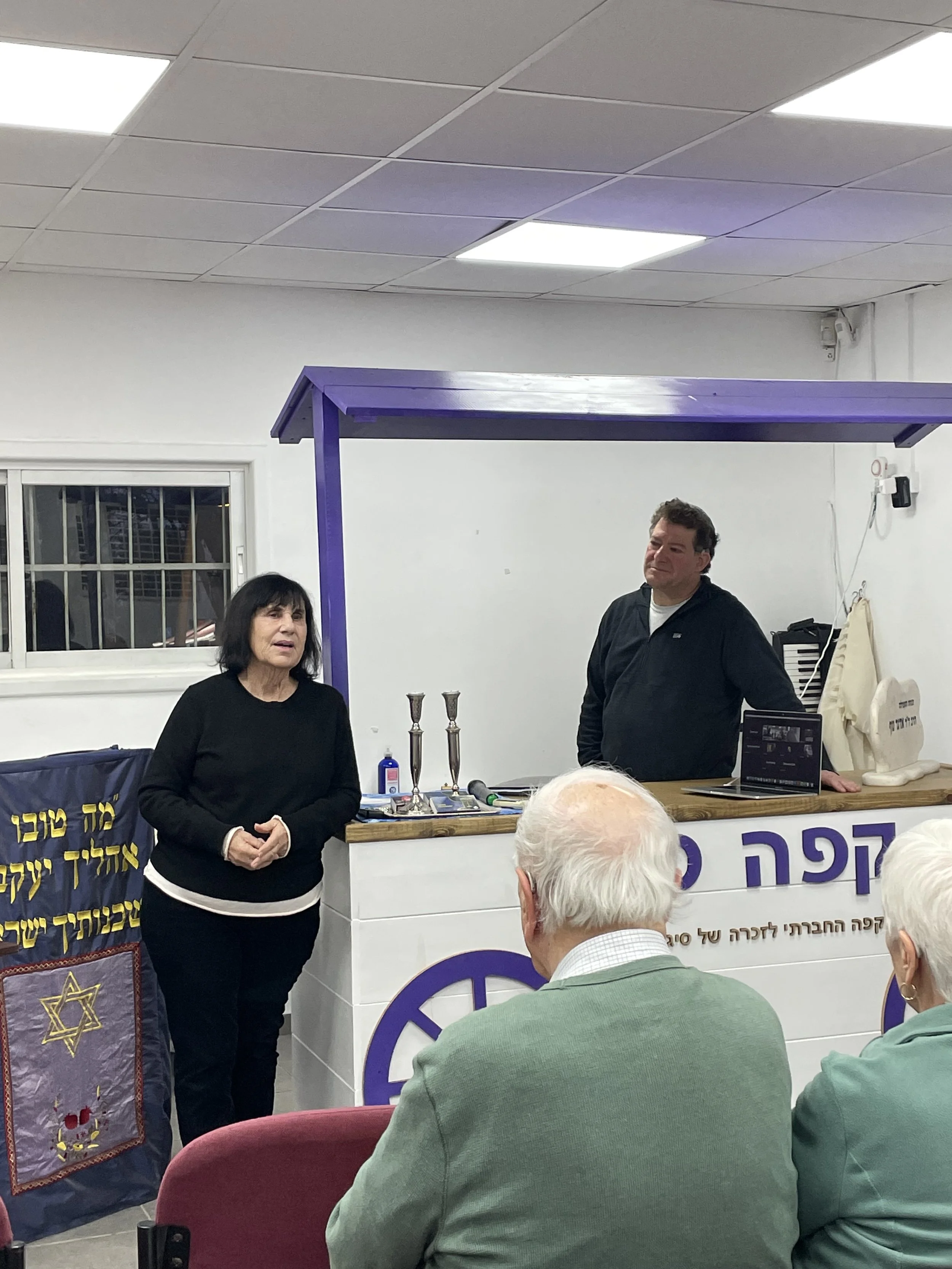
Neal and Anita Shkedi of Transcending Trauma teaching in Netanya, January 29, 2026
Shai Tsabari with Avner Gadasi and Yehuda Keisar: Heidi and I did some volunteer work and spent time listening to a lot of Israeli stories over the past few days. By Wednesday night we were ready for a break, and I spotted that Israeli musician Shai Tsabari was performing with two of the most renowned Jewish Yemenite musicians of the generation, Avner Gadasi and Yehuda Keisar. Tsabari is of the generation of Israeli rock stars whose music is a mixture of western (rock, dance, psychedelia) and eastern (Jewish piyyutim, and especially the melodies of Tsabari’s ancestry in Yemen). He’s also known for his engaging and soulful personality that draws people in and gets them up and dancing.
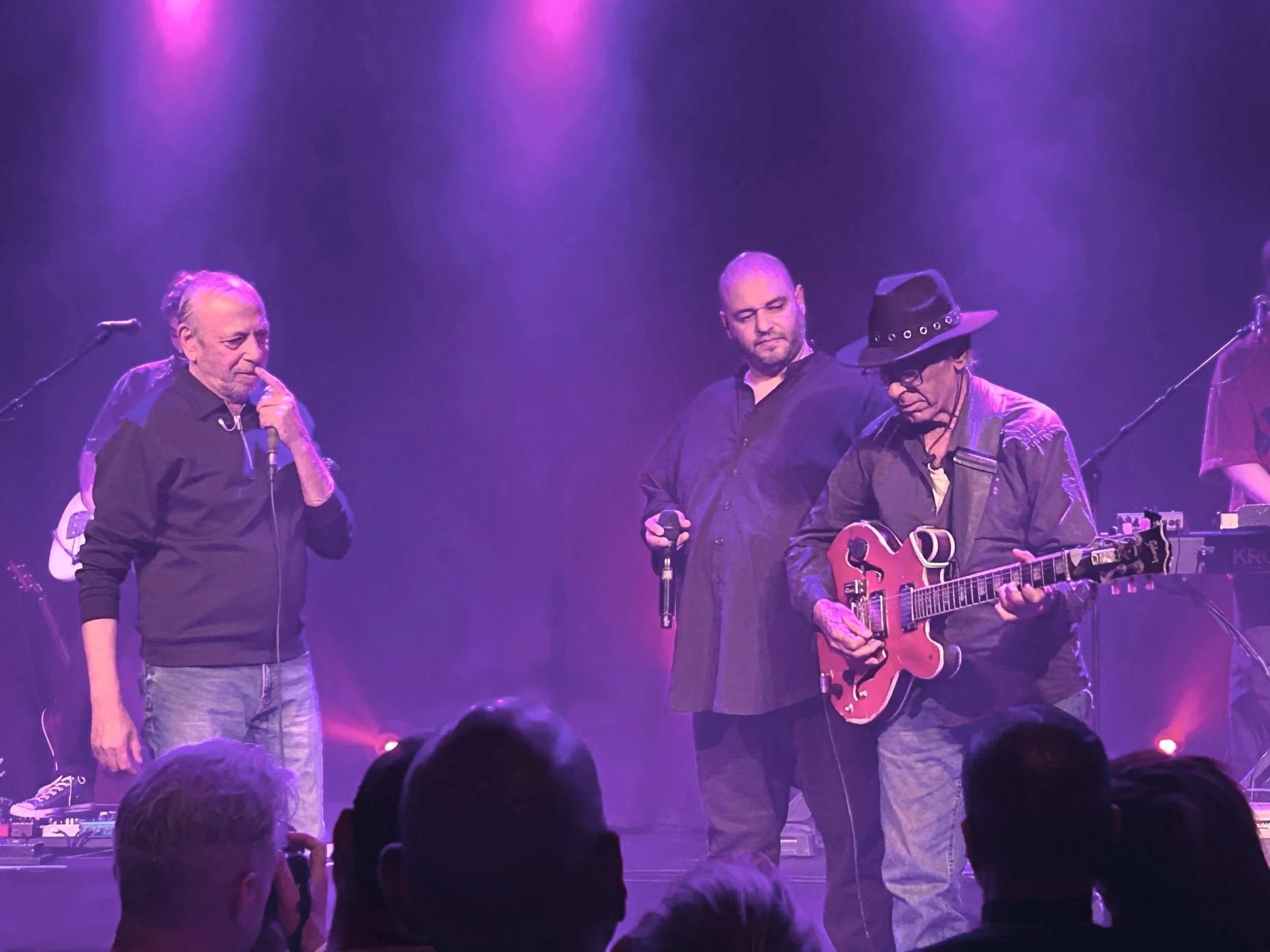
Avner Gadasi, Shai Tsabari, Yehuda Keisar (photo: NG)
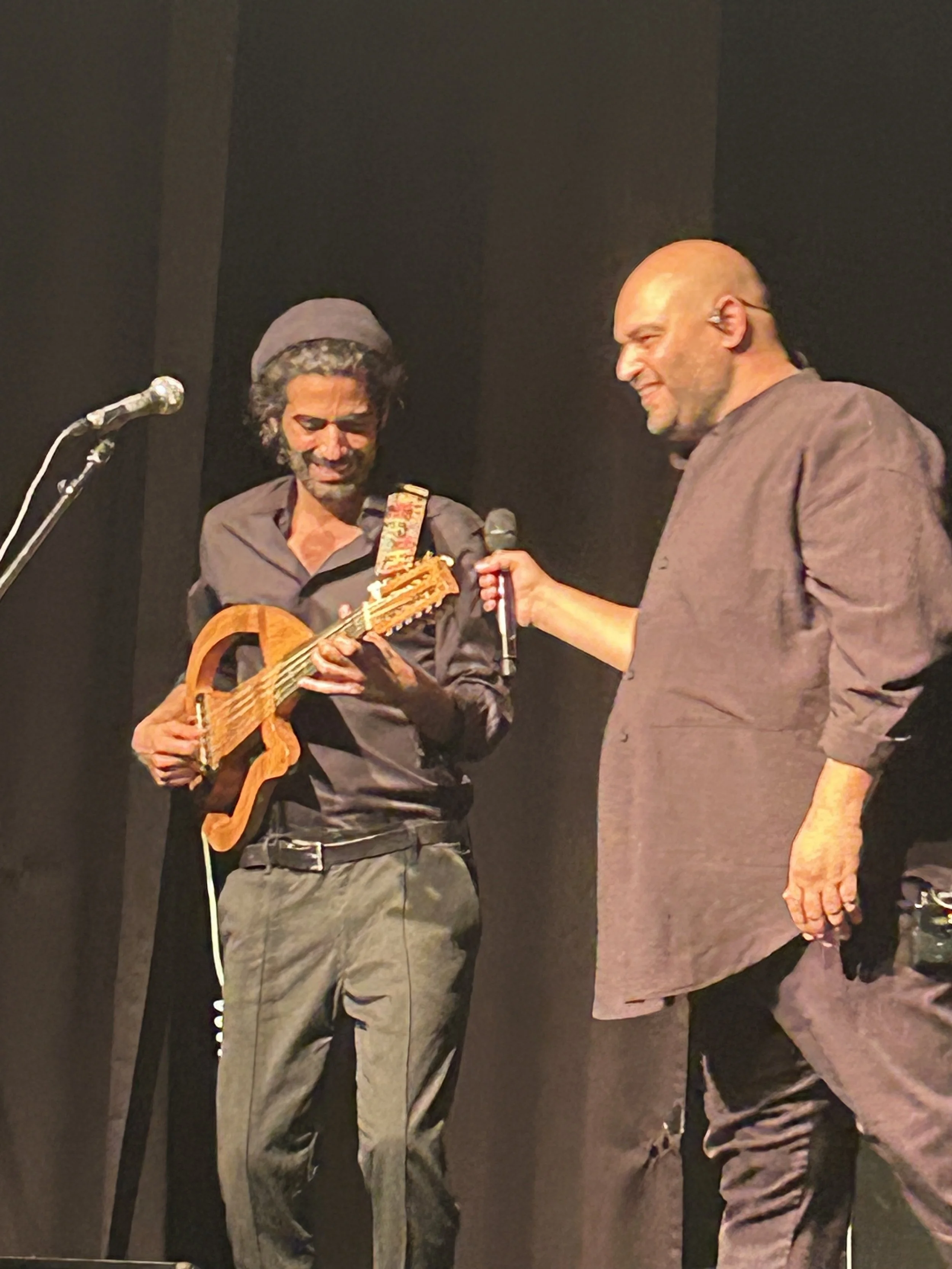
Shai Tsabari and a member of his band with a unique instrument (photo: NG)
I knew the concert would be fun—but I didn’t realize how deeply it would move me. The place was packed with Israelis, who by the second half of the show were on their feet, singing every word, and some dancing on chairs and tables. It struck me: here is a nation that has been so traumatized and so soaked in grief; a society that for the past two-and-a-half years could recite the name of every hostage. Tonight I felt a catharsis, a release, a transcendence that is reflected in the slogan “We Will Dance Again.”
It doesn’t mean that the next morning the nation won’t resume confronting its PTSD. But for one night, a few hundred of us were smiling, slapping hands, dancing to the old-new sounds of Jewish musicians, and realizing that there is an unspoken spirit that binds this people together in history and hope.