Seeking Inspiration Before Shabbat Noach

Like you, I can’t think of anything else.

I can’t sleep; I wake up thinking about Israel and go to sleep at night saturated with the war. I can’t stop thinking of the victims, the bereaved families… and the 200 people seized by terrorists and being held hostage in the subterranean web of tunnels beneath Gaza City.

And I suspect, like you as well, my thoughts occasionally drift to Hamas’s apologists nearby: the sycophants so consumed with satanic bloodlust that they would gaslight the Jews, suggesting that the victims of rape and murder justifiably brought this on themselves.

I’m not afraid to use that word, “satanic”; I wish I could find in my vocabulary an even stronger word. I think of the kibbutzim where a significant portion of their residents were slaughtered, like Nahal Oz and Be’eri (400 people massacred on Be’eri alone). Children and their grandparents – a merism for others in-between, too – kidnapped, raped, beheaded; paraded through the streets of Gaza and displayed to the world on social media by human monsters with the same looks on their faces that we see in the old photos of southern lynchings from a generation ago.

Tonight, The Atlantic is reporting on a seized Hamas handbook that describes in detail how to kidnap children and adults (yes, kidnapping children was part of their plan from the beginning) – and how to execute any hostages that prove to be difficult.

As I think of those at Harvard, Yale, Berkeley, Columbia, and so many other campuses who think that their facile commitment to “social justice” justifies their blood libel, I keep returning to this poem by Natan Alterman:

אז אמר השטן: הנצור הזה
איך אוכל לו
אתוֹ האמץ וכשרון המעשה
.וכלי מלחמה ותושיה עצה לו

 ואמר: לא אטל כחו
ולא רסן אשים ומתג
ולא מרך אביא בתוכו
ולא ידיו ארפה כמקדם,
רק זאת אעשה: אכהה מחו
.ושכח שאתו הצדק

 כך דיבר השטן וכמו
חוורו שמים מאימה
בראותם אותו בקומו
.לבצע המזימה

So Satan said: This besieged one,
how can I defeat him?
He has bravery and talent,
Weaponry and cleverness and knowhow.

 And he said: I will not take his strength
And I will not harness him with a bridle and rein
And I will not make him succumb to fear
Nor will I weaken his arms like in the past.
No, this is what I will do: I’ll blur his thinking
And he will forget that his cause is just.

Thus spoke the devil,
And the heavens grew pale
Watching him step up
To fulfill the scheme.

I’ve been thinking about this poem all week. I’m ambivalent, because of my difficulty with Alterman. He’s one of the great voices of the first generation of the State. But his politics were quirky: early on he was the conscience of the new nation, associated with the left wing Mapai party; but after 1967, he shifted to the far-right. In a sense, he’s claimed by every Israeli—and he’s a bit of heretic to everyone, too.

But those words—“he will forget his cause is just”—are emblazoned on my mind as I hear about intelligent people who are devoid of decency or morality.


Yet Shabbat is coming. I’m searching for words of… not hope, and not comfort; offering those things would be shallow and fake.  But there is inspiration to be found:

I find inspiration in the staggering stories of bravery of individuals like Noam and Gali Tibon, who drove into the combat zone and rescued their children and grandchildren and other survivors of the music festival massacre on October 7. And there are more stories like this: of responders whose impulse is to go towards the chaos to save lives, not to run.

I find inspiration in the student leaders who are putting themselves at significant risk by standing up for truth in the face of dissembling professors and the forces of antisemitic hate on their campuses.

I’m inspired by those who do the work of Tzedakah and Tikkun Olam. My inbox—like yours—is full of invitations to support the work of those who are providing healing and strength; this is the Jewish reflex. The Kavod Tzedakah Fund gave away over $8,000 this week to support Israelis who are hurting.

And, frankly, I’m inspired by some of our leaders—G-d bless President Biden for his moral clarity!

I’m even grateful for certain elements of the news media. It is very easy (and appropriate) to criticize the tendency for moral equivalency in the media, and I realize that I may be naïve and this may change next week. But I have to say:  I’ve had CNN on constantly these past few days, and I’ve seen reporting that is overwhelmingly sympathetic to the victims of terror and will provide no outlet for the dissembling of Hamas or its sycophants. Shoutouts to Jake Tapper! Kaitlin Collins! Wolf Blitzer! Anderson Cooper!

And I find inspiration in the Torah. This week, we read anew the story of the Noah and the Flood, recalling a time when the whole world seemed full of nothing but brutality, cruelty, lawlessness, and hate. But that’s my translation. In the Hebrew Bible, there is a single word for “brutality, cruelty, lawlessness, and hate” that describes the state of the world before the Flood. That word is חָמָֽס / hamas.

Of course, in the Torah hamas subsumes the world, and Creation is destroyed.

But after the Flood, G-d makes a promise to Noah and to all subsequent humankind:

וְזָכַרְתִּ֣י אֶת־בְּרִיתִ֗י אֲשֶׁ֤ר בֵּינִי֙ וּבֵ֣ינֵיכֶ֔ם וּבֵ֛ין כּל־נֶ֥פֶשׁ חַיָּ֖ה בְּכל־בָּשָׂ֑ר
וְלֹֽא־יִֽהְיֶ֨ה ע֤וֹד הַמַּ֙יִם֙ לְמַבּ֔וּל לְשַׁחֵ֖ת כּל־בָּשָֽׂר׃

I will remember My covenant between Me and you and every
living creature among all flesh, so that the waters shall never again
become a flood to destroy all flesh.
(Genesis 9:15)

The point is: G-d tells humankind that there are no more “do-overs.” When the fires of hate and murderousness rise, it will take human beings to put out the flames. And, as Alterman said, don’t be distracted by those forces that will make you doubt the justice of your existence.

One more thing: I’ve heard many Jewish friends remarking, “Where are our interfaith neighbors? Why are they so silent at this time?” Perhaps you’ve felt this way too. I was starting to think that way on Tuesday, and my mind was drifting to some very dark places…

And then my doorbell rang. It was my next-door neighbor, an older woman who moved in over the summer; we’ve just begun getting to know her and her husband. In her arms—a large peace lily, whose white flowers were just beginning to bloom. She said:  “You and your family have been constantly in our thoughts. You must be in so much pain. We wanted to bring you this gift, with our affection and blessings.”

And then I was inspired anew, because all these cases remind me that light and love and decency have not been completely extinguished from this world.
The Battle for Decency and Truth Has Begun: Big-P and Little-P Politics

The people of Israel are like a single body and a single soul…
If one of them is stricken, all of them feel pain
.
—Mekhilta d’Rabbi Shimon bar Yochai 19:6

 
Can it be that this is only the fifth day since hell emerged on earth? Only five days since Hamas terrorists spilled out of Gaza, slaughtering and beheading and raping and kidnapping, murdering Jewish teenagers and children and elders and adults, gleefully posting the pictures of their carnage on social media, with the lust for Jewish blood dripping from their lips, recalling the festival-atmosphere around Black lynchings in the American South?

Less than a week from October 7, 2023, the day on which more Jews were slaughtered than any other day since the Holocaust? Since the massacre of Kibbutz Be’eri, where Hamas terrorists calmly walked from room to room, executing over 100 children and adults?

In Israel, the names of the 150 Jews who have been kidnapped and stolen away into the dungeons under Gaza are still being tallied and released. The funerals have begun. The hospitals are full of the wounded.

We here in the Diaspora sit with broken hearts, watching our screens with a mélange of helplessness, outrage, grief, and devastation. Many of us are increasingly feeling the dismay and outrage as we see the propaganda war that is beginning against the victims of Hamas’s carnage. Already we are hearing the gaslighting that would turn the victims into the perpetrators.  

The fight will be political, and it will be rough. But I’d like to point out that there are some signs out there that we are not going to be all alone.

I want to differentiate between “Politics” with a big-P and “politics” with a little-p.  

By “big-P” Politics, I mean the actions of our elected leaders and people with power. If it gives you any peace of mind at all—it does for me—I feel inspired by the leadership of many of our officials. Starting at the top, praise must be given to President Biden. Every public statement he’s made has been note-perfect: the message is unequivocal and exactly right, and the tone is genuinely empathetic and honest. And Biden’s speech from Tuesday—please watch it in full—is just the most perfectly toned message that we could ask for.

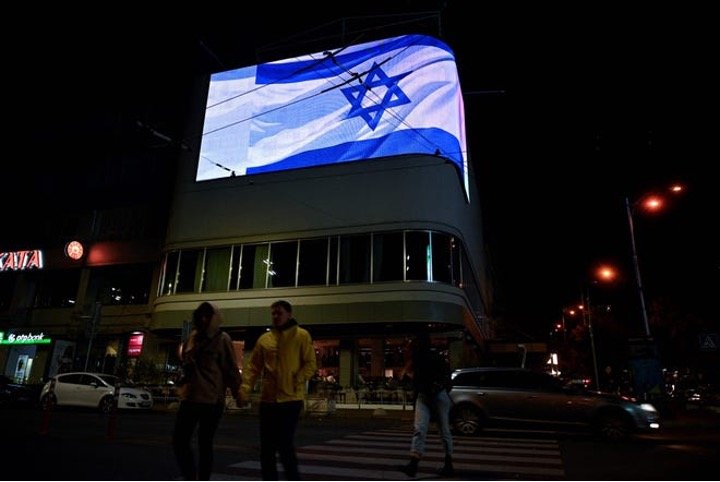
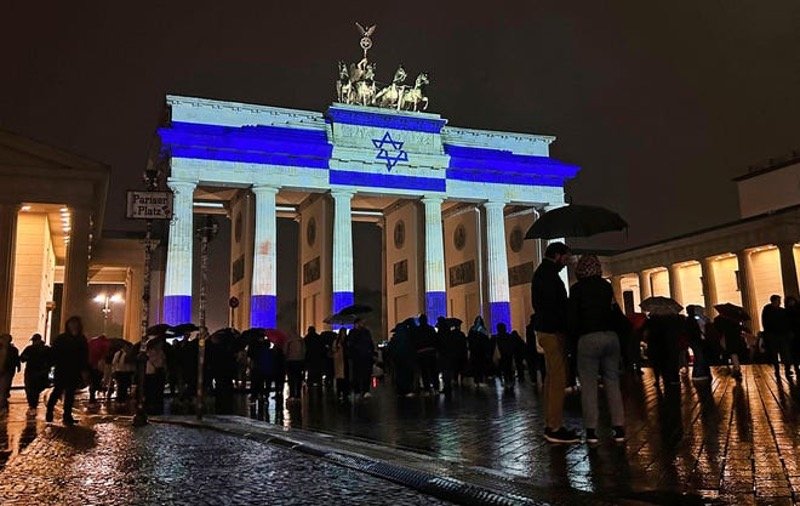
Further, there is the spectacle of world landmarks being lit up with blue-and-white and the images of the Israeli flag. There seems to be a momentary awareness, for the time being at least, that Israel’s fight against terror is the world’s battle as well. Scroll through these pictures - some of them from cities with grotesque antisemitic histories - and be amazed at what is being expressed:

Brandenburg Gate, Berlin (!!!)

10 Downing Street, London

Bulgarian Parliament, Sofia

Kyiv, Ukraine

Melbourne, Australia

Eiffel Tower, Paris

Baku, Azerbaijan

Ground Zero, New York City

I’m not naïve; perhaps all this goodwill will evaporate as the battle in Gaza rages on. But for the time being, it is good to know that there are leaders out there with moral clarity.

Closer to home, there were hundreds of us at the Boston Common on Monday, and all the senior leadership of Massachusetts was present: two U.S. Senators, the Governor, and the Mayor of Boston. Senator Elizabeth Warren—who historically has not been a champion of Israel—was superb. Her message was crystal-clear and to-the-point: the U.S. Congress will support Israel with the resources it needs to defeat this vicious enemy. What more could we ask for?

If your elected leaders have done likewise, they need to hear from you (and so does President Biden): A short, concise email or phone call that says: “Thank you for the clear and unambiguous support of Israel and the Jewish community in their battle against terror.” Anyone who’s worked in an elected office will tell you:  Critics always make their voices heard, but it is so important to hear encouragement from constituents when leaders do the right thing.

And then there’s this letter that the Massachusetts Board of Rabbis received today from the Black Ministerial Alliance in Boston, representing over 20,000 Black parishioners in the region:

It is breathtaking in its courage and compassion. To each signatory to this letter: Thank you; THIS is what moral leadership looks like.


Which leaves the “small-P” politics, the propaganda wars that spread locally, on social media, and on campus.

Here, too, it’s not all bad. I must tell you: yesterday I was walking the dog downtown, and a stranger approached us. She said, “I see that you’re Jewish. Do you have friends and family in Israel?” (“Yes.”) And then she proceeded to say how horrified she is, and expressed her sympathy and support. It meant so much; I hope you’ve had similar interactions.

Because surely encounters like these counterbalance Twitter (X), Facebook, and Instagram, the cesspools of antisemitism and conspiracy theories that consume the “progressive” left as much as the reactionary right.

American universities, too, have fallen from places of serious discourse to places of Jew-hatred (where we pay hundred thousand-dollar tuitions for the privilege of being scapegoated).  Well-documented, already, is the shame of Harvard University, reminding us that higher education is often synonymous with higher antisemitism. But it's happening everywhere, as cowardly college presidents “All Lives Matter” the Jews by issuing statements that wring their hands over the suffering of “all sides.”

When a “friend” posts anti-Israel rhetoric that blames the victim and sympathizes with terrorists, you essentially have two choices.

If the person is someone with whom you have a real-life relationship and you think actually respects you, you might engage in a conversation that starts like this: “Your post is extremely hurtful right now. This is a community in mourning, and you are compounding their—my—pain with your thoughtlessness. Please remove your hateful words.”

And if the person is someone who doesn’t respect you, and is in no sense a “friend,” you really only have one option: “Your post reveals that you are an antisemite who has no grasp of the situation, and it is hateful. You have chosen the side of some of the most bloodthirsty killers in the world. I have no interest in engaging with you from this point forward. Goodbye.” Unfriend immediately.

I fear we will be living with this into the foreseeable future. And I greatly fear for our students on campus, as well as all of our kids who will be assaulted on social media. But there are also occasional reminders that we are not alone in this moral and righteous fight—and for that we must express our gratitude.

Kohelet Speaks

We awoke on Shabbat morning to emergency alerts on our phones about the terrorist assaults in Israel: the massacres, the kidnappings, the missiles, the bloodthirsty sadism of Hamas. It was the 50th anniversary, to the day, of the Yom Kippur War—when the Arab nations launched a coordinated surprise attack against Israel on the holiest day of the year. The timing was lost on no one.

The kidnappings—they’re preoccupying me more than anything. The perversity of seizing over 100 elders, teenagers, and children—and dragging them across the border for the most hideous sort of cruelties. The ghastly social media videos of terrorists celebrating the display of their humiliated captives, which remind me of the old photos of southern lynchings and the celebratory smiles of the Klan and their allies.

My friends relate: Today Israeli TV is reporting that Hamas has kidnapped a mother with her one year-old and five year-old. Hamas has put out videos on social media of Gazan children beating a 5 year-old kidnapped Israeli child. It is being estimated that well over 100 people are being held hostage.

The brazen evil of the enemy is staggering.

I’m writing now on Sunday morning. The events are unfolding in real time. Israel is the only story that’s being discussed on the news. It’s a nightmare. There are political pundits much smarter and more authoritative than I, so I won’t contribute anything new here.

All I want to relate is what I experienced in shul. Saturday was Shemini Atzeret as well as Shabbat, the culmination of the Days of Awe. It’s supposed to be a day of cumulative joy, a day that reflects on the intimacy that communities have experienced with each other and G-d over the past 3 ½ weeks since Rosh Hashanah (as reflected in the Haftarah reading from 1 Kings 8).

But we also read Kohelet (Ecclesiastes), one of the most astonishing books of the Tanakh. Kohelet is astounding because of its humanness, its profound awareness that faith cannot provide easy answers to the true reality of a world that can be cruel and unjust. Kohelet, more than any other book of the Bible, acknowledges the dissonance between religious faith and the fact that the world can be terrifying.

Knowing that terrorism was ripping through Israel, it seemed to me that the words of Kohelet were on fire. This happens sometimes—the Rosh Hashanah after 9/11 comes to mind—when the words of the ancient text come scorching off the page, filled with resonances that we’d never seen before.

Here are some of the verses of Kohelet that grabbed me. I offer them here for no solace, no comfort, and no radical insights. Simply that they spoke to my soul yesterday and they continue to do so today:


וְשַׁ֣בְתִּֽי אֲנִ֗י וָאֶרְאֶה֙ אֶת־כּל־הָ֣עֲשֻׁקִ֔ים אֲשֶׁ֥ר נַעֲשִׂ֖ים תַּ֣חַת הַשָּׁ֑מֶשׁ
וְהִנֵּ֣ה ׀ דִּמְעַ֣ת הָעֲשֻׁקִ֗ים וְאֵ֤ין לָהֶם֙ מְנַחֵ֔ם וּמִיַּ֤ד עֹֽשְׁקֵיהֶם֙ כֹּ֔חַ וְאֵ֥ין לָהֶ֖ם מְנַחֵֽם׃

I further observed all the oppression that goes on under the sun:
the tears of the oppressed, with none to comfort them;
and the power of their oppressors—with none to comfort them
(4:1).


וְאִֽם־יִתְקְפוֹ֙ הָאֶחָ֔ד הַשְּׁנַ֖יִם יַעַמְד֣וּ נֶגְדּ֑וֹ
וְהַחוּט֙ הַֽמְשֻׁלָּ֔שׁ לֹ֥א בִמְהֵרָ֖ה יִנָּתֵֽק׃

Two are better off than one…
For if one attacks, two can stand up to him
(4:12).


אֶת־הַכֹּ֥ל רָאִ֖יתִי בִּימֵ֣י הֶבְלִ֑י
יֵ֤שׁ צַדִּיק֙ אֹבֵ֣ד בְּצִדְק֔וֹ וְיֵ֣שׁ רָשָׁ֔ע מַאֲרִ֖יךְ בְּרָעָתֽוֹ׃

In my own brief span of life, I have seen both these things:
sometimes someone good perishes despite their goodness,
and sometimes someone wicked endures despite their wickedness
(7:15).


…וְעֵ֣ת וּמִשְׁפָּ֔ט יֵדַ֖ע לֵ֥ב חָכָֽם׃
כִּ֣י לְכל־חֵ֔פֶץ יֵ֖שׁ עֵ֣ת וּמִשְׁפָּ֑ט כִּֽי־רָעַ֥ת הָאָדָ֖ם רַבָּ֥ה עָלָֽיו׃
כִּֽי־אֵינֶ֥נּוּ יֹדֵ֖עַ מַה־שֶּׁיִּֽהְיֶ֑ה כִּ֚י כַּאֲשֶׁ֣ר יִֽהְיֶ֔ה מִ֖י יַגִּ֥יד לֽוֹ׃

…Someone wise, however, will bear in mind that there is a time of doom.
For there is a time for every experience, including the doom;
for calamity overwhelms.
Indeed, what is to happen is unknown;
even when it is on the point of happening, who can tell?
(8:5b-7)


…גַּם־זֶ֖ה הָֽבֶל׃ אֲשֶׁר֙ אֵין־נַעֲשָׂ֣ה פִתְגָ֔ם מַעֲשֵׂ֥ה הָרָעָ֖ה מְהֵרָ֑ה
עַל־כֵּ֡ן מָלֵ֞א לֵ֧ב בְּֽנֵי־הָאָדָ֛ם בָּהֶ֖ם לַעֲשׂ֥וֹת רָֽע׃

And here is another frustration: the fact that the sentence imposed for evil deeds is not executed swiftly, which is why people are emboldened to do evil (8:10b-11).


And of course:

עֵ֥ת מִלְחָמָ֖ה וְעֵ֥ת שָׁלֽוֹם׃

A time for war and a time for peace (3:8).

Pray for the safe return of the hostages.

Demand justice.

Support the victims. (Some prominent Tzedakah organizations are already mobilizing on the ground: IsraAID, the Joint Distribution Committee, and more.)

Refuse to tolerate equivocation and “both sides-ism” in the media. Failure to retaliate would be immoral: it would allow evil to flourish unchecked.

Call your Israeli friends and let them know that we are doing these things.

And may G-d have mercy on us all.

Allon. Gabriel Allon.

As the doggiest days of summer are upon us, I find myself savoring every moment of the season’s blessedly slow pace.  I think I cling to summer a little more desperately than most people, even more than the kids on my block who are celebrating its freedoms. And I treasure having the time to read, especially fiction.

One sure sign of summer for me is the arrival of a new Gabriel Allon novel. Gabriel Allon is sort of an Israeli James Bond; a globetrotting superspy working for the Jewish State against its many enemies whose evil, more often than not, threatens the world order beyond the Middle East.

Gabriel Allon is the creation of author Daniel Silva, a journalist-turned-novelist who earned his stripes by serving for many years as a Middle Eastern correspondent for United Press International. He’s created a series of novels that have certainly struck a chord with the public: Each summer’s new Gabriel Allon adventure rises to the top of the bestseller lists. As Israeli politics more and more elicit a sigh (and an oy), it’s a fun fantasy to step into this world.

Gabriel Allon doesn’t want to carry the weight of the Jewish future—or the world’s—in his hands, but it is regularly thrust upon him: a theme which is very Jewish.

Since it’s a literary conceit that superspies have superpowers, Gabriel has one too: he’s a master art-restorer. In these novels, before he’s called into to service, he’s often found in Italian cathedrals, a Jewish artist restoring Grand Masters’ church altarpieces with his meticulous paintbrush. (There’s an interesting metaphor at work there, but it’s summer and I don’t want to think about it too deeply.) Gabriel’s world inevitably brings together recurring characters such as London gallery owners, Corsican mafiosi, secretive Vatican officials, and world-famous classical musicians.

But Gabriel Allon is quite different from James Bond doing his duty for her majesty’s secret service. Gabriel doesn’t wear tuxedos or play cards with super-villains in Monte Carlo, nor is he a suave womanizer. He’s full of reticence and ambivalence, though when a mission arrives, he will ruthlessly see it through to a just conclusion.

Gabriel is no lone wolf like 007 either. Over the arc of the series, Gabriel has gone from being a master spy/assassin, to the ambivalent Head of the Mossad, to the now-retired figure who keeps getting sucked back in to saving the world. He works with a recurring team of Israeli Mossad agents, each one a distinctive Israeli character: a feral Russian, a passionate Yemenite, a woman damaged in her youth from a terrorist’s bomb, an aging scholar who worked in a Vienna office hunting Nazi war criminals before being recruited, and so on.

My favorite recurring character in these novels is the elderly and retired spymaster Ari Shamron, a fictional figure who is presented as the founder and shaper of Israel’s spy network, ruthlessly hunting down Israel’s enemies “by way of deception” (Proverbs 24:6, and the title of a famous expose of the Mossad). In the novels, Shamron earned his legendary status by engineering the capture Adolf Eichmann, which makes him an imaginative amalgam of Isser Harel and others. He’s a father figure to Gabriel, but also often gives voice to the coldblooded ruthlessness of the task at hand—a counterpoint to the moral ambivalence that Gabriel, or the reader, may feel.

What makes Daniel Silva stand out in the genre of spy fiction is the authority with which he writes about the world’s crises. Sure, the books are summer potboilers, and as such, they don’t qualify as great literature. But they seem rooted in very timely evils. The new novel The Collector was written in 2022-23, and the ongoing Russian assault on Ukraine provides the intrigue. While the book is populated by art thieves, corrupt energy officials, bloodthirsty Russian oligarchs, and amoral white collar criminals of all sorts, there is one archvillain behind it all: “Volodya,” as his nervous acquaintances know him. Vladimir Vladimirovich Putin.

Putin never actually appears in the novel, but the author makes clear that he is the mastermind of the Russian kleptocracy that inherited the Soviet Union’s morals and values—and its nukes. As such, this villain is significantly scarier than, say, Goldfinger or Dr. No or Ernst Stavro Blofeld, because Putin is all-too-real.  

The book elaborates on Putin’s viciousness. As the Russians plot a false-flag operation in Ukraine, we read this exchange among his subordinates:

“How many will die?
General Belinsky had shrugged. They were only human beings, after all.
“But they’re Russian citizens.”
“So were the people in those apartment buildings back in ninety-nine. Three hundred were killed,
just to make certain that Volodya won that first election.” (The Collector, p.336)

 
The Gabriel Allon adventures provide several valuable gifts. For starters, they are “just” novels—their primary purpose is the pleasure of a good page-turner, perfectly timed for summer reading.

Second, Daniel Silva’s writing has the scent of insider-truth. He not only has done his investigative homework, but he also seems to know things from the contacts he made through his years as a correspondent in Washington and the Middle East. I trust him, for instance, when he implies that Putin’s insidiousness and cruelty go far deeper than most of us realize. (I write this in the days after Yevgeny Prigozhin, the mercenary who led a rebellion against Putin’s military two months ago, was killed in a mysterious plane crash.) All of Silva’s books seem full of insider information—and all of them have an Author’s Note at the end that delineate which aspects of the book are fiction and which are rooted in reality.

Most importantly, there’s the question of whether or not the world needs an Israeli James Bond.

The key distinction between Gabriel Allon and James Bond is the most obvious: Allon is Jewish, working for the security of the Jewish state. As such, he doesn’t have the luxury of being an amoral, smirking playboy like Bond. Although the series almost never gets preachy about Zionism, there is always, beneath the surface, a sense of “we’re fighting for our lives, because we have to.” Gabriel Allon, a fictional creation, was recruited in the wake of the very real Munich Olympics Massacre, when Palestinian terrorists murdered 11 Israelis while the whole world was watching. As Gabriel sought out and assassinated the perpetrators, he paid a devastating price: a terrorist’s car bomb killed his son and maimed his first wife. That wife, Leah, recurs in the novels as a spectral presence living in a hospital in the Jerusalem hills, unable to make new memories, caught in an awful moment in time of Jewish victimhood and personal tragedy.

This darkness gives the books an edge, an awareness, that most potboilers lack. Gabriel Allon is a perpetually ambivalent figure. We sense that he’d prefer to be with his wife and kids, or with his paints and brushes. He doesn’t want to carry the weight of the Jewish future—or the world’s—in his hands, but it is regularly thrust upon him: a theme which is very Jewish.

Neither Allon nor Daniel Silva is prone to making long speeches about the justice of their cause. In fact, we sense that each of them is well aware of the moral imperfections of their case. Gabriel Allon’s Jewishness is not found in the Talmud or the synagogue. It’s found in a wearying view of Jewish history, especially in Europe, that led to tragedy and the absolute need for a Jewish homeland (and its defense forces). Here’s a brief exchange from The Collector, between Gabriel and his Danish intelligence counterpart:

“A promising beginning.”
“It’s early, Lars.”
“I’ve always believed in the power of positive thinking.”
“That’s because you’re Danish,” said Gabriel. “I find it comforting to prepare myself for a calamity and to be pleasantly surprised if it turns out to be a garden-variety disaster instead.”
(p.268)

There’s also no small amount of fantasy-projection going on in these novels, too. Any Jewish reader of these stories will say, “If only we had a secret weapon like Gabriel Allon!”

Throughout this hot summer of 2023, Israel’s existential threats seem to be internal as much as external. No superspies will rescue us from the current crisis, which calls upon the Jewish people as a whole to take a stand.  In the meantime, I’m glad to know that Gabriel Allon is out there where he belongs, ready to set aside his paintbrushes and step into service when he’s needed. Just in time for summer.

Rags and Bones: Remembering Robbie Robertson

The death of Jaime Robbie Robertson this week had lots of baby-boomers-and-people-who-love-them returning to some of his classic songs with The Band: “The Weight,” “The Night They Drove Old Dixie Down,” “Chest Fever,” and so on.

For me, I went back to a song of Robbie’s that appeared on one of The Band’s lesser-known, later efforts:  “Rags and Bones,” from their 1975 album Northern Lights—Southern Cross:

Catch a taxi to the fountainhead
Blinking neon penny arcade
A young Caruso on the fire escape
Painted face ladies on parade

The newsboy on the corner
Singing out headlines
And a fiddler selling pencils
The sign reads: Help the blind

Coming up the lane callin’;
Working while the rain’s falling
Ragman, your song of the street
Keeps haunting my memory…

“Rags and Bones” evokes an immigrant saga in the New World at the turn of the 20th century. It could be one of many North American cities, although in this case it happens to be Toronto. And it’s significant because it’s as close as Robbie Robertson ever got to really exploring his Jewish roots with The Band, a motley assemblage some of the most important musicians of the rock era.

For those who don’t share my obsessions, here’s a quick background. In the late 1950s—really at the dawn of rock and roll—a teenage Robbie Robertson joined up with a Canadian rockabilly group called Ronnie Hawkins & the Hawks, where he quickly became not only a skilled lead guitarist, but also a prolific songwriter. The group traveled around North America, where they became intimately familiar with indigenous American music (including rock, country, and blues) and indigenous American dysfunction (racism).

But their immortality came from hooking up with Bob Dylan, providing the electric backing for him in 1965 and in his world-changing tour of 1966. After that, they moved to Woodstock and, under the very democratic moniker “The Band”, began producing some of the greatest music of the 1960s.

The rest of the story of The Band is important: Watkins Glen in 1973 with the Dead and the Allman Brothers, the largest rock concert of all time; the barnstorming 1974 tour with Dylan; the tragic self-induced chemical hell that consumed so many of the generation, including Band members Richard Manuel and Rick Danko. And of course the legendary “final show” on Thanksgiving Day 1976 that was filmed as The Last Waltz. But those are just the broad outlines.

Robbie Robertson is never included in those perennial lists of “Jews in Rock.” His songwriting, incredibly rich as it is, rarely has allusions to Judaism or the Bible beyond its mythic status. (There are exceptions, like “Daniel and the Sacred Harp.” Although I’ve read that Robertson insisted that the line “I pulled into Nazareth” in “The Weight” refers to Nazareth, Pennsylvania.) But it’s noteworthy just how many Jewish musicians were part of Dylan’s revolutionary mid-60s scene, including Mike Bloomfield, Al Kooper, and Harvey Brooks (who still advertises his services as a music teacher in Jerusalem).

As Robbie Robertson tells it, his mother Dolly was Mohawk, and he spent part of his Canadian childhood on the Six Nations Reservation where she had grown up. The man whom young Robbie was told was his father was named Jim Robertson, an alcoholic who abused Robbie and his mother. Eventually Dolly and Jim split up.

It was a few years later in late adolescence that Robbie discovered the identity of his real father: a man named Alexander David Klegerman, a Toronto hustler and gambler and the child of Jewish immigrants, who had fallen in love with Robbie’s mother. Alex was apparently a pretty sketchy figure. Long before Robbie’s maturation, he was killed in a hit-and-run, which was rumored on the streets not to have been an accident.

Robbie learned this from his uncles Morrie and Natie Klegerman, Jewish underworld figures who took a liking to the kid. In his 2016 autobiography Testimony, Robbie wrote about regular trips to the heart of Toronto’s Jewish neighborhood, and how even though it was completely different from his upbringing in the suburbs or on the reservation, it struck something deep in his soul.

The most Jewish event in Testimony occurs when Morrie and Natie take teenage Robbie to meet his paternal grandfather for the first time. Shmuel Chaim Klegerman was a devout Yiddish-speaking Jew. Robbie describes their introduction this way:

The old man trembled with emotion. He put his hand on his chest and lowered his head as if in prayer. Then slowly he raised his eyes to look at me, a combination of joy and sorrow on his face. I felt frozen in the moment as he studied me, searching, I’m sure, for traces of his departed son. He gave a nod of recognition and a tear rolled down his cheek.

Then he spoke in English. “Alex was my favorite. Your father was my favorite.” I managed a slight smile in acknowledgement before glancing at Natie with sympathy, concerned he’d be upset by his father’s stark favoritism, but he waved it off—as if it didn’t bother him in the least. He signaled for me to join them. I walked over and took both their outreached hands, profoundly moved by the whole experience. But though I knew Natie meant for it to bring me closer, in this strange new world I still couldn’t help feeling like an outsider. (Robbie Robertson, Testimony, p.66)

His Uncle Natie said, “Well, Jaime, how about that? I bet you didn’t know you were Jewish.”

Again, this background doesn’t make Robbie Robertson a “Jewish songwriter.” But it seems important to me that someone who spent so much time exploring the mythology of America in his writing has a strong fiber of Judaism running through his makeup.

In the liner notes to Northern Lights—Southern Cross, Robbie recalled Old Toronto (again, in language that could just as well describe Old Boston, or Newark, or Baltimore, or a dozen other places in the New World):

People would come from the old country that were intellectuals and scholars… I had a grandfather who was one of these people. He was an intellectual but he made his living in Toronto as a rag man. I remember as a little kid, there was a lane behind our home and I remember hearing this guy coming up the land singing this song ‘Rags and bones, old iron.”

…As a kid, there was something a little scary about this. Then, years later finding out that it had a connection to my heritage inspired me to write this song.

The song was “Rags and Bones,” with its refrain:

Keep haunting my memory
Music in the air
I hear it everywhere
Rags, bones, and old city songs

One of Robbie Robertson’s gifts is to remind us that the collective culture we call “Americana” is a polyglot of immigrant stories—including the stories of transplanted Jews. Like Philip Roth—and, for that matter, Bob Dylan—Robbie Robertson’s legacy is much bigger than “Jewish writing.” But his (North) American writing includes Judaism in its DNA, an important acknowledgment that our presence here is as authentic and distinct as anyone else’s. And, for that matter, it reminds us that to begin to understand “America” includes understanding the story of the Jewish experience here.

That was one of his blessings to us—alongside some of the most immortal songs of the century.
!יהי זכרו ברוך

Image: Bob Dylan and Robbie Robertson, Forest Hills, New York, 1965 © Daniel Kramer

Against Defeatism

“Pessimism,” says my teacher Donniel Hartman, “is a luxury we cannot afford.” There is simply too much at stake at this political moment in Israel.

By now, regular readers of this blog know that I’m utterly preoccupied by the Israeli pro-democracy protests. It’s been two weeks since I’ve returned from Jerusalem, and I’m still processing all that I experienced. As the very fabric of Israeli society appears to be unraveling. I have no doubt that the righteous protesters in Israel are fighting for the nation’s soul.

For me, Judaism is the antonym of defeatism and hopelessness. So, for that matter, is my Zionism.

As you know, Netanyahu’s coalition just struck down the Supreme Court’s ability to declare extreme legislation “unreasonable.” This is just the first salvo in an attack on one of the basic pillars of democracy: a system of checks and balances of the legislature by an independent judiciary. No wonder the despicable National Security Minister Itamar Ben Gvir—a racist thug with a terrorist background—tweeted that “the salad bar is open.” What he meant: This initial legislation is just the appetizer; a full entrée of laws castrating the court and dismantling democratic norms is now on its way to being served from the legislative kitchen.

This is what those demonstrations in the streets of Israel are fighting against.

I’ve written about this in previous posts over the past few months. But today I’m struck by what I’m hearing from some American Jews, and I’m distressed.

Since my return, I’ve heard from many acquaintances—in person, via email, and on social media:

Many are despondent about what’s taking place in Israel.

Some have suggested that they’ve lost hope in Israel’s future: the ultra-nationalist, theocratic takeover is nearly complete.

Some have said that, after a lifetime of supporting Israel, that they’re “out,” and can no longer pay lip service to a regime so antithetical to their democratic values.

Some are saying they will now refocus their identity as a “proud Diaspora Jew,” shaping a Jewish identity that excludes Zionism.

Some well-known Israeli pundits—and not necessarily those of the left—are grieving Israel’s future.

Some rabbis in prominent synagogues have announced that they can no longer recite Tefillat HaMedina / the Prayer for Israel at Shabbat services. Periodically we hear of rabbis (in non-prominent communities) declare that they are non-Zionist, if not outright anti-Israel.

And so on.

I don’t know how widespread those feelings of defeat are, but the sentiment is growing. And for every Jew who declares that they’re “out,” there will no doubt be a much larger number of silent resignations, of Jews who simply will construct their Jewish lives without Israel.  

I feel the pain that is inherent in every one of those exchanges. These are the heartfelt reflections of people who historically have acknowledged that Israel’s situation is different from ours: its battle against bloodthirsty enemies is existential. But many of these same individuals are now asking: How can I support a regime whose values have so profoundly diverged from my own?

But I can’t go there. And it’s desperately important that you don’t, either. We cannot afford pessimism—not when there is so much on the line.

This is my respectful response to all those friends and students who have shared their fears and concerns with me:

Our Israeli friends need our support, now more than ever. I’m quite clear that the battle that Israel is facing—from within this time—is as much an existential battle as it has ever faced from external enemies.

All around the country, hundreds of thousands of Israelis have been demonstrating for more than half a year, every Saturday night. (Israel’s population is approximately 9.7 million people. Do the math and be amazed by the breathtaking, massive proportion of the country that has taken to the streets in the name of democracy!)

Here are three more points I’d ask every person who is wavering to keep in mind:

(1)   The protests have been going on for 30 weeks!, and show no sign of weakening.

(2)   The patriotism of the demonstrators. The rallies are oceans of blue-and-white, with flags everywhere. Most rallies open or close with “Hatikvah.” In a world where the right wing tends to co-opt patriotic symbols, this is remarkable.

Consider this, by way of contrast. During the Trump years, I and many of you went to our share of political rallies: the Women’s Marches and Black Lives Matter. We believed in those causes. But what would it have taken for us to go and demonstrate every single Saturday night for months on end? That’s the depth of the commitment Israel’s pro-democracy camp has made.

And for that matter: Imagine showing up at a Women’s March or BLM rally with an American flag and singing the national anthem. It would have been more than strange—it would have been completely tone-deaf and out of place. By contrast, the rallies in Israel are a united call of the authentic voice of Zionism: democratic, patriotic, and inclusive.

(3)   What about the “insurmountable demographics” that we keep hearing about? Some of the defeatism has stemmed from a great resignation that these battles will never end, as birthrates among the religious right soar.

But that misses the point of what these demonstrations are all about. Because the revolt against Netanyahu’s coalition is not primarily a leftist revolt. It is a great upheaval by the broad democratic MAJORITY of the country: the center-left, center, and center-right. They may disagree on a wide variety of public policies, but who completely agree about the heart of the matter: That Zionism and Judaism are inherently democratic, and that an assault on Israel’s basic democratic institutions endangers everyone.

For me, Judaism is the antonym of defeatism and hopelessness. So, for that matter, is my Zionism.

For those with long memories, there have been dark times before. Israel emerged from the ashes of the Shoah—when 1/3 of the Jews in the world were murdered and the very question of any Jewish future at all was worth considering. There was June 1967—and a news blackout when it wasn’t clear for several days whether or not Israel had been wiped off the map. There was October 1973, when Jews ran from their synagogues on Yom Kippur to fight off a multilateral sneak attack by there enemies. There was, and remains, the threat of a nuclear Iran.

In none of these moments did we concede defeat or abandon our vision of the future. 

Diaspora voices in this struggle are crucial. Israelis are telling us that we are desperately needed for this battle. If you’ve ever been inspired by Israel’s seemingly endless reserves of innovation and perseverance in the face of implacable enemies… well, this is the moment when that inspiration and fortitude is needed more than ever.

Reliable polls show that this government has lost the backing of its supporters and a significant majority of Israelis—left, center, and the democratic right. A line has been crossed by the empowerment of theocratic fascists: that’s what those demonstrations are about.

There are no guarantees. Who knows how much damage this regime can wreak before it collapses or is voted out? But I do know this: If America’s liberal Jews sit this one out, or if we renege on the seventy-five-year commitment to the State of Israel, we will be complicit in empowering the forces of an anti-democratic theocracy in the Jewish state.


I’m writing these words on Tu B’Av, a date in the Jewish calendar devoted to love. “Love” is the way I was raised to describe our relationship to Israel. Love, of course, demands conviction and dedication over the long haul. We say to people whom we love: “My love for you is not conditional. We will, on occasion, disappoint one another. I will challenge you and criticize you when you let me down. But my commitment to you is undying.”

If you share similar sentiments, please: Do not submit to defeat. Recall the words of the Talmud, written in tears at another time of Jewish anguish:

,כּל הַמִּתְאַבֵּל עַל יְרוּשָׁלַיִם — זוֹכֶה וְרוֹאֶה בְּשִׂמְחָתָהּ
.וְשֶׁאֵינוֹ מִתְאַבֵּל עַל יְרוּשָׁלַיִם — אֵינוֹ רוֹאֶה בְּשִׂמְחָתָהּ

Whoever mourns for Jerusalem will merit to see her future joy,
and whoever does not mourn for Jerusalem will not see her future joy.
(Ta’anit 30b)


Those words tell me that we will win this struggle, too. But we must not surrender to despair. To be part of the grand wonder of Israel means we must share in her battles, and not give up on the vision of what the state could and should be.  

Zealots and Tisha B'Av

In the middle of the Talmud tractate Gittin there is a long stretch of stories about the destruction of the Second Temple and the fall of Jerusalem on the 9th day of Av in 70 CE.

 One of those stories begins with these words:

...הֲווֹ בְּהוּ הָנְהוּ בִּרְיוֹנֵי

There were Zealots among the people of Jerusalem… (Gittin 56a)

Who were these Zealots? In the context of the stories in the Talmud, they were extremists who were so fanatical in their opposition to the Romans and to any Jew who disagreed with them that they would resort to violence and even murder. More on them in a moment.

In the meantime, what can we say about this word בִּרְיוֹנֵי / biryonei / “zealot”? The Klein Dictionary of Rabbinic Hebrew (1987) is blunt in its translation: “terrorist, bully, hooligan.” It says that the etymology of this word is obscure; it may be related to the Akkadian root barānū, meaning “violent, impertinent, rebellious.” (The old-school Jastrow dictionary of the Talmud suggests “rebel” or “castle guard”, losing the intimation of violence that the author is surely suggesting.)

Whatever the origin of the word, there is no mitigating that the Talmud holds these villainous, murderous Jews accountable for the desperation and ultimately the destruction of the city.

Yes, the Talmud speaks of fellow Jews in precisely this language, when necessary.

After introducing the Zealots, the story unfolds. The war with the Romans had been building since the year 66 CE. The people of Jerusalem—as well as Jews who had fled from outlying villages—sequestered themselves behind the city walls. The Roman onslaught was temporarily held at bay. And, the Talmud tells us, there were enough storehouses of food and cisterns filled with water to sustain the Jerusalemites for at least twenty-one years to come!

That is, until the biryonim / Zealots assert themselves.

We learn that there were a variety of political opinions among the refugees in Jerusalem at that time. Some wanted to fight; others wanted to appease the Romans; others thought it might be possible to work out terms of a compromise. The Zealots, being zealots, demanded adherence to their armed revolt—and would not tolerate dissent. The Rabbis counseled patience (so we see where the editors of the Talmud come out in this debate), and Zealots revolted:

.קָמוּ קְלֹנְהוּ לְהָנְהוּ אַמְבָּרֵי דְּחִיטֵּי וּשְׂעָרֵי, וַהֲוָה כַּפְנָא 

[In order to force the residents of the city to engage in battle],
the Zealots rose up and burned down the storehouses of wheat and barley,
and a famine ensued.
(Gittin 56a)

They burn the 21-year supply of food that had been secured for the people’s survival! Because that, too, is what Zealots do: They are so certain of the righteousness of their cause, it doesn’t matter if there are brutal shortcuts that need to be taken to strong-arm or threaten people to their side. It doesn’t matter if there is death and destruction in the short term; all that matters the ultimate adherence to the cause. Violence for them is a necessary tool towards the ultimate ends—and it doesn’t matter who suffers.

The Talmud makes its anti-Zealot position perfectly clear. Immediately after the Zealots burn down the storehouses, we’re told a series of tragic stories about individuals who suffer horribly and die as a result of the desperate situation the Zealots have triggered. One thing leads to another—a tragic chain of events—that ultimately leads to the destruction of the Temple, the devastation of Jerusalem, and the Exile of the Shekhinah, G-d’s Intimate Presence.

This is what we mourn annually on Tisha B’Av.

Here's one more warning from the Talmud. As Jerusalem was in flames, the great Rabbinic leader, Rabban Yochanan ben Zakkai, sought to save the city. He approached Abba Sikkara, the leader of the band of “dagger men” among the Zealots, asking Abba Sikkara to stop the madness:

.שְׁלַח לֵיהּ: תָּא בְּצִינְעָא לְגַבַּאי. אֲתָא.
?אֲמַר לֵיהּ: עַד אֵימַת עָבְדִיתוּ הָכִי, וְקָטְלִיתוּ לֵיהּ לְעָלְמָא בְּכַפְנָא
!אֲמַר לֵיהּ: מַאי אֶיעֱבֵיד, דְּאִי אָמֵינָא לְהוּ מִידֵּי קָטְלוּ לִי
.אֲמַר לֵיהּ: חֲזִי לִי תַּקַּנְתָּא לְדִידִי דְּאֶיפּוֹק, אֶפְשָׁר דְּהָוֵי הַצָּלָה פּוּרְתָּא

Rabban Yochanan ben Zakkai sent a message to Abba Sikkara: Come to me in secret.

He came, and Rabban Yochanan said to him, “How long will you keep doing this, killing everyone through starvation?”

Abba Sikkara replied, “What can I do? If I say something to them [my Zealot followers], they’ll kill me.”

Rabban Yochanan ben Zakkai said to him, “Find a way for me to get out of the city. Maybe there can still be some small salvation…” (Gittin 56a)


This is astonishing, if not surprising. The leader of the Zealots in Jerusalem knows things are out of control and that his followers have gone too far. But he’s passed the point of no return: by empowering his violent followers, he’s placed himself at risk. If he steps back from the brink, he knows they will turn their violence back on him.

Yes, I’m thinking about the political situation in Israel. (How could I not be thinking of it?) Today we’re seeing the devastation of what happens when Zealots—ultra-nationalist extremists coupled with the ultra-religious political parties—are permitted to dictate their terms to the majority of the nation. Such is the nature of coalition politics: the radical fringe is allowed to set the agenda—and they are willing to sacrifice the well-being of the rest of the country that dares to oppose their agenda.

In the days of the Talmud, they burned the storehouses of food—to force the people’s hand. The result led to the maw of the Roman legions and the destruction of Jerusalem.

Today, they will undermine the very foundations of Israel’s democracy, placing the economy, civil liberties, and the very promise of the “Start-Up Nation” at risk. I do not believe Jerusalem will be destroyed, but there are plenty of people this Tisha B’Av who are entertaining that very thought.

Tisha B’Av will have a profound and shocking resonance this year. Clearly, there are Zealots unleashed in Jerusalem. The extent of their destruction is yet to be known—a forceful, fully awake citizenry is determined not to allow them to burn down the country. The importance of our voices can’t be overstated.

There will be much to mourn this year on Tisha B’Av, and many lessons for our own time. May the reflections of this season help us to turn back from the brink of disaster, and may we save ourselves from the Zealots in our midst.


Tisha B’Av begins on Wednesday evening, July 26.
All are welcome to join me of an online study session on its themes on
Thursday, July 27,
at 12:00 noon Eastern time. Register here to receive the Zoom link and Passcode.

"Tzav Shemoneh" in Jerusalem

.כּל מִי שֶׁאֶפְשָׁר לִמְחוֹת לְאַנְשֵׁי בֵיתוֹ וְלֹא מִיחָה — נִתְפָּס עַל אַנְשֵׁי בֵיתוֹ

Those who have the ability to protest the conduct of members of their own house
and do not do so are held accountable for the behavior of the members of their house.

—Talmud, Shabbat 54a

What is happening in Jerusalem right now?

Tzav Shemoneh is a military term meaning “an open ended call-up of army reservists” at a time of war. On Tuesday, a Tzav Shemoneh went out to Israeli society . But it wasn’t to report to military centers: it was a call to turn out it the streets of Jerusalem and Tel Aviv and elsewhere, to combat the enemy from within.

My friends and I were there—in our anguish. I love this city, more than any other, and its pain causes me pain. And Jerusalem in microcosm reveals a country that is pulling apart at the seams.

The first thing you notice at these pro-democracy demonstrations is the flags: they are everywhere. These demonstrations are an ocean of blue and white. This is really rather astounding: it’s a statement that they are being conducting in the name of Zionism and the history of Israel. This movement is not an anti-Israel movement; to the contrary, it’s a demand tht the country return to its First Principles that were inscribed in the Declaration of Independence: a liberal and democratic Jewish state.

Israel is experiencing an existential crisis against internal political enemies, and we were being called to action. Today the Knesset passed the first reading of the “reasonableness” bill. I won’t go into the details; you can read about it here. There is broad consensus that this bill is the first big step in the government’s attack on the judiciary, a bastion of democracy in this land, and a bulwark against tyranny. This government has declared war on the independent judiciary—and its traditional role of providing checks-and-balances on the legislature.

But that sounds like far too genteel explanation of why, for 27 straight weeks, hundreds of thousands of Israelis have marched and demonstrated.

In fact, the battle in the streets of Israel is the struggle for the democratic and Jewish soul of this nation. It’s that important, no overstatement.

That’s why there were hundreds of thousands of people around the country who spontaneously poured into the streets today.

The government, on the other hand, turned water cannons on the protesters in Tel Aviv. Water cannons? The same as in Birmingham in 1963? Yes.


The background to this crisis:

Last November, Prime Minister Benjamin Netanyahu assembled the most extreme – and most religiously Orthodox – ruling coalition that Israel has ever seen. Since then, the coalition has begun its draconian assault on the democratic consensus that has held Israel together for 75 years. The ultra-Orthodox parties have drained public coffers of social funds and funneled them to support their yeshivas and other institutions. The tacit endorsement of radical violence in the West Bank has condoned settler riots in Palestinian towns in of tit-for-tat violence after Palestinian attacks on Jews. The cabinet is populated by a handful of politicians who have been indicted or are under investigation. And there’s “judicial reform,” the all-out assault on the Supreme Court’s checks and balances on legislators.

The Minister of National Security, Itamar Ben-Gvir, is a man who the Israeli army refused to draft into service years ago because he was considered too extreme in his views, given his association with the racist, terrorist Kahanist movement. The Minister of Finance, Bezalel Smotrich, who also has a history associated with Jewish terrorism, has essentially been granted a militia of his own in the West Bank, where he has offered words of encouragement and assent for the settler pogromists who have stormed Palestinian towns, burning vehicles and buildings.

Then there’s Aryeh Deri, who has been convicted multiple times of taking bribes and tax evasion. Netanyahu wants to appoint this “religious” man, whom everyone knows is profoundly corrupt, as his Minister of the Interior. The Supreme Court quite properly told Netanyahu that Deri’s appointment to a senior cabinet position was absolutely “unreasonable” and illegal. So Netanyahu’s response is to attempt to castrate the Court by removing their authority to declare such things illegal by virtue of being “unreasonable.”

This is a ruling coalition, in the words of my teacher Yossi Klein Halevi, of “political zealots, religious fundamentalists—and the ‘merely corrupt.’”

Have no doubt: This is not a partisan political spat by the opposition who lost an election. This is the great awakening of the political center, who are saying:  Yesh Gvul: There is a limit to indecency. A limit to assaults on the very foundations of democracy. A limit to racist violence committed in the name of the nation with the winking assent of the government. A limit to cruelty which is contrary to the fundamental values of Zionism and Judaism.


How do I feel about this struggle?

It is hard to write these words. I am a passionate lover of Israel, and recognize that its very existence testifies to the fact that we live in an extraordinary chapter of Jewish history. A 2,000 year-old dream became a reality—together with a rebirth of its ancient language, the building of one of the most robust economies in the world, and the growth of an international hotbed of hi-tech innovation and development that transforms communities around the world for the better.

But I write because of my love and admiration. Because as Yossi has also pointed out, all this is at risk if we allow these zealots to achieve their goals in the dismantling of Israeli democracy. Israel’s economic “start-up nation” miracle will disappear quickly, because the young, centrist population of the country will abandon a Jewish fundamentalist state for freer societies, without a doubt.

I am quite clear that this struggle is as much of an existential threat as Iranian nukes.

This is no time to stand on the sidelines, or to abandon the people of Israel who are asking all of usto support them in this fight.

And so we poured into the streets tonight, marching up to the Knesset and chanting “Dem-o-krat-yah!

I’ve written about this struggle for Israel’s soul a lot by now. But it’s pretty clear to me that keeping Israel Jewish and democratic is the most urgent Jewish task of this moment.

Israelis have made it clear that our voices are essential. What can Jews living in the Diaspora do?

(1) Stay informed (read the daily Times of Israel) and let those who have a direct line to the government know that we will not allow our beloved Israel to become a fascist theocracy, that we oppose this government’s cynical judicial reforms, and so on. Who needs to hear it?  Your nearest Israeli consul. The President of your local Jewish Federation (demand to know how your Federation is directing its money to support democracy and pluralism). And others with ties to Israeli political, business, and institutional leadership.

(2) Show up to local demonstrations in your nearest city. The group on the forefront in the U.S. is UnXeptable—Saving Israeli Democracy, created by Israeli expatriates living in America, and you can follow them on Facebook.  

And when you go, make it clear that you’re protesting as a Zionist and a Jew. It is essential that we make clear: this is not an anti-Israel or anti-Zionist movement. Quite the opposite: our love for Israel and her people demands that we fight for her freedom. That’s what all those flags are about.

(3) Support those organizations that are doing the work of fighting for democracy in Israel.

·      Israel Religious Action Center

·      Hiddush—For Religious Freedom and Equality

·      USA for Israeli Democracy

·      New Israel Fund

… among many others.

(4) Support those organizations that are promoting a non-coercive, liberal form of Judaism in Israel. That includes:

·      The Israel Movement for Progressive Judaism

·      Gesharim Letikvah—Bridges for Hope

·      Specific Reform and Conservative communities in Israel with which you may be associated
…among many others.

I haven’t written much here about how this is a pivotal moment for Israeli-Diaspora relations; I’ll do that another time. But suffice to say that this is a moment, for all “supporters of Israel,” to put their cards on the table. As the Talmud teaches, “Those who have the ability to protest the conduct of members of their own house and do not do so are held accountable for the behavior of those members of their house.”


Jerusalem's Past and Present (A Fast Day in the Eternal City)

Shalom from Jerusalem.

 Today (Thursday) is the minor fast day of 17 Tammuz, a date which has a special resonance in this place and time. 17 Tammuz ushers in the three-week period leading up to the Fast of Tisha B’Av, which commemorates the Exile—from Jerusalem, from G-d, and from one another.

In truth, a great many Jews don’t observe the so-called “minor fasts” that are sprinkled throughout the Hebrew calendar. These days mark ancient calamities and, frankly, Jewish history has enough other tragedies to fill the entire year. Personally, when I’m in the U.S., I don’t typically fast on this day.

But Jerusalem does twisty things to my soul. When I’m in Jerusalem in the summer, these Three Weeks pack a lot of spiritual resonance for me. That’s what I’d like to share with you here.

According to the Mishnah, five calamities befell the Jewish people on this date in antiquity—events which serve as an overture to the dark dirge of Tisha B’Av:

חֲמִשָּׁה דְבָרִים אֵרְעוּ אֶת אֲבוֹתֵינוּ בְּשִׁבְעָה עָשָׂר בְּתַמּוּז וַחֲמִשָּׁה בְּתִשְׁעָה בְאָב
,בְּשִׁבְעָה עָשָׂר בְּתַמּוּז נִשְׁתַּבְּרוּ הַלּוּחוֹת
,וּבָטַל הַתָּמִיד
,וְהֻבְקְעָה הָעִיר
,וְשָׂרַף אַפּוֹסְטֹמוֹס אֶת הַתּוֹרָה
.הֶעֱמִיד צֶלֶם בַּהֵיכָל

 On the 17th Day of Tammuz:
1.     The Tablets were shattered by Moses [when he saw the Israelites had made the Golden Calf];
2.     The daily offering in the Temple was cancelled [by the Romans in the buildup to the Temple’s destruction];
3.     Jerusalem’s walls were breached [by the Roman legions];
4.     The Roman general Apostomos publicly burned a Torah scroll;
5.     An idol was place in the Sanctuary.

Mishnah, Ta’anit 4:6


Each of these events is noteworthy as the launch-pad for deeper tragedies for the Jews, several of which took place three weeks later on the 9th of Av.

But here I’d like to focus on #1: The Rabbis consider this to be the date that Moses came down from Mount Sinai with the tablets in his arms, saw the Golden Calf and the Israelites dancing around it, and smashed the stones with the Ten Commandments to pieces.

Of the five items listed in the Mishnah, this one is an anomaly. Most of the events in this list occur later in history, at the end of the Second Temple period when Rabbinic Judaism was emerging. But #1, strangely, is a throwback to the era of Moses and the Torah.

Why would the Rabbis of the Mishnah link their recent tragedies—from which they were still reeling—to Moses’s story from the distant past?

The Torah relates that when Moses came down from Mount Sinai with the Tablets of the Law in his arms, he was stunned to see the Israelites cavorting with the idol that they had compelled Aaron to make:

וַֽיְהִ֗י כַּאֲשֶׁ֤ר קָרַב֙ אֶל־הַֽמַּחֲנֶ֔ה וַיַּ֥רְא אֶת־הָעֵ֖גֶל וּמְחֹלֹ֑ת וַיִּֽחַר־אַ֣ף מֹשֶׁ֗ה
וַיַּשְׁלֵ֤ךְ מִיָּדָו֙ אֶת־הַלֻּחֹ֔ת וַיְשַׁבֵּ֥ר אֹתָ֖ם תַּ֥חַת הָהָֽר׃  

As soon as Moses came near the camp and saw the calf and the dancing,
he became enraged; and he hurled the tablets from his hands and
shattered them at the foot of the mountain. (Exodus 32:19)

 
This cries out for interpretation. Even though we can understand Moses’s anguish, we must ask: How could Moses smash the Tablets? These were the words of G-d, inscribed by the finger of G-d and infused with holiness! It’s hard to imagine that, even in a fit of rage, Moses would treat the Tablets with disgust. (Think of our own internal reflexes, if a Torah scroll totters in our presence, to leap and make sure it doesn’t fall to the ground.) How could Moses do such a thing?

There are many commentaries on this, but here is my favorite: Moses didn’t carry the Tablets—the Tablets carried him. After all, Moses was an eighty-year-old man at this point in the story. Are we to imagine that he lugged weighty stone tablets  from the mountain peak down to the base camp all by himself?!

No, says the Midrash: the letters—the writing of G-d—made the stones light as a feather. Their inherent holiness carried Moses along with the Tablets.

When those very letters saw the people cavorting with their idol, the letters peeled off the tablets and fled back to their divine Source. They had to: Holiness and the worship of gold don’t mix.

And with the letters gone from the tablets, suddenly Moses was holding the full weight of the stones. He didn’t exactly smash the tablets; it’s more like he lunged forward due to their new-found enormous weight and he couldn’t hold them anymore. They fell to the earth and shattered. (This midrash is found in Pirkei d’Rabbi Eliezer Chapter 45.)

It’s a good story, but there’s a deeper lesson going on here.

This midrash maintains that when people behave obscenely, then the Shekhinah, G-d’s intimate Presence, flees. So do her accoutrements, such as the letters on the tablets. Holiness can only blossom in the fertile soil of ethical living.

And that brings us right back to Jerusalem. The Second Temple, the Talmud teaches, was destroyed because even though the people followed the letter of the law, they treated one another with senseless hatred (sinnat chinam), and because no one—not the political leaders, nor the Rabbis, nor the Jews of the community—would stand up and counteract the hate. So the spirit flew back to G-d, and the Temple imploded. Because holiness can’t abide in the idolatrous atmosphere of hate.

The Rabbis saw the idolatry of the Golden Calf as the prelude to later apostasies in history: namely, when human hatred was so ever-present that people couldn’t see the Image of G-d in their neighbor. And they treated one another accordingly, leading to tragedy and Exile.

Jerusalem 2023. The city is as sublime as ever—it’s my favorite city in the world. The history, grandeur, and spiritual power of this place touch me as much as ever. But there is a weight that is evident in Jerusalem, too. Not far from the surface—the ancient explosiveness is still there.

There are deep tensions permeating Israeli society right now. Monstrous zealots and their enablers are running the government and given unprecedented power and authority. The West Bank is seething with violence—including the violence of Jewish radicals running amok, in tit-for-tat retribution with Palestinian extremists, burning vehicles and property. The very ideals of democracy are under attack.

Fortunately, there is also a huge swath of Israeli society that is determined not to allow the Zealots to bring down all that we’ve built. And so on Saturday night—as they have for the past six months—tens of thousands of demonstrators will take to the Israeli streets again, carrying Israeli flags and singing “Hatikvah.” This is no extremist gathering; it’s a patriotic display against zealotry and assaults on Israel’s democratic institutions, a demand to return to the ethical first principles of Zionism and Judaism.

As I’ve written before, the most pro-Israel stance that we can take today is to support these pro-democracy protests around Israel and America.

Today I’ll be fasting, in remembrance of how Jerusalem was lost 2,000 years ago, and how hatred, violence, and cruelty drive the Shekhinah into Exile. And then on Saturday I’ll be with the demonstrators, to show that we’ve learned the lessons of our living past. For the sake of Jerusalem: because G-d help us all if the Shekhinah is forced to flee from this place once again.


Photo: Arch of Titus, Rome; depicting the plundering of the Jerusalem Temple by the Roman army in 70 CE (NG)

On Friendship—Part Two

Part Two: Talmud, Kabbalah, and My 7 Principles about the Nature of True Friends.
You can read
Part One here.
A Source Sheet with all these texts and more is
available here.

 
Did the Sages of old have “friends”— in the way we use the term? After all, the books that they wrote—the Mishnah and Talmuds and the classic Midrashim—have so much to say about the most important relationships in life:  parents and children, sisters and brothers, married partners, teachers and students, and so on. Surely they had some insights about the love between individuals who are not family?

Let’s start with a question of vocabulary. The Bible generally uses the term רעה when it speaks of friends; that’s the word that’s used to describe Job’s three friends who come to comfort him in his loss and suffering. This linguistic root means “associate, neighbor, fellow” in Biblical Hebrew and, provocatively, “yoke” in Arabic and Ge’ez (ancient Ethiopic).[1] Thus the word implies someone whose fate is “hitched” to our own, whose destiny is interconnected with ours.

The Rabbis prefer the term חבר / chaver. The root חבר appears many times in the Bible, but only in one or two instances might it mean something close to “friend,” such as Psalm 119:63: 

חָבֵ֣ר אָ֭נִי לְכל־אֲשֶׁ֣ר יְרֵא֑וּךָ וּ֝לְשֹׁמְרֵ֗י פִּקּוּדֶֽיךָ׃
I am a chaver to all who fear You, to those who keep Your precepts.


But when the term appears in the Bible, it usually means bound together, as in Psalm 122:3 which celebrates Jerusalem:

יְרוּשָׁלַ֥͏ִם הַבְּנוּיָ֑ה כְּ֝עִ֗יר שֶׁחֻבְּרָה־לָּ֥הּ יַחְדָּֽו׃
Jerusalem built up! A city knit together [she-chubra lah yachdav].

 By preferring the term חבר, the Rabbis are saying that their chaverim are people whose lives are bound together with each other.

But that doesn’t mean that the Rabbis’ chaver meant “friend.” Oftentimes, a chaver is more accurately translated as “peer” or “classmate” or “fellow disciple of the Rabbis.” Chaverim were people who were similarly ideologically aligned to be part of the emerging class of Rabbinic Judaism, at a time (1st century BCE-3rd century CE) when there were other kinds of Judaisms that were competing for prominence.

So it’s not accurate to translate every appearance of the word chaver in the Mishnah or Talmud as “friend.”

Still, there are many occasions where the relationships between these peers—who together study Torah, celebrate and mourn, and share the meaning of Life—qualify as “friendships.”

Most famously there is a story of Honi the Circlemaker, a legendary figure who slept for 70 years and then tried to reintegrate himself into his community. He returns to his family home, only to discover that his grandchildren’s generation consider him a madman. Then he goes to the Beit Midrash, where the Rabbis are talking about Honi’s generation as if it were ancient history. There, too, he receives a chilly reception and he is not brought into the community. At the conclusion of this story, which preceded The Twilight Zone by 2,000 years, Honi gives up, prays for mercy, and dies. The story concludes with the words:

אוֹ חַבְרוּתָא אוֹ מִיתוּתָא
O chavruta o mituta
Either companionship or death!
(Talmud, Ta’anit 23a)

The author of that story knew a thing or two about the desperate yearning people have for real human connections.


A striking description of friendship in Judaism comes from Maimonides’s commentary to the Mishnah. A well-known passage from Pirkei Avot says:

עֲשֵׂה לְךָ רַב, וּקְנֵה לְךָ חָבֵר
Get yourself a teacher [rav], and acquire for yourself a chaver(Pirkei Avot 1:6)

Now, we might consider the word chaver here to mean what it usually means in classic Jewish literature: a peer, a committed study-partner. And that is probably what it means in its context. But Maimonides (1135-1204) takes this passage as a jumping-off point to create a taxonomy of friendships that sounds so… modern.

After spending some time discussing the unusual verb here—“acquire”—Rambam goes on to say:

.האוהבים ג' מינים: אוהב תועלת אוהב מנוחה ואוהב מעלה…
There are three types of friends:
A friend for one’s benefit
[ohev to’elet],
A friend for one’s enjoyment
[ohev m’nucha]
And a friend for one’s ultimate virtue
[ohev ma’alah].

He then proceeds to explore the meanings of each of these categories. But before we go there, note that the word for “friend” has again evolved. Where the Bible used רעה  and the Sages employed חבר, Rambam prefers the word אוהב / ohev. If it didn’t sound so weird, we would translate the term as “lover”: a non-erotic sort of intimacy that true friends understand. Rambam already has tipped his hand: He’s not talking about “peers” or “associates”; he’s talking about two human beings who truly love one another.

Here's how he describes each of these three groups, in increasing levels of intimacy:

“A friend for one’s benefit / ohev to’elet”—This is like the friendship of two business associates, or of a king and his retinue.

[My comment: This may be Rambam’s lowest level, but it still connotes real friendships. Many of us might have warm and rich relationships with our co-workers. We may enjoy spending time with them, celebrating birthdays together or talking about our lives and our families. We probably don’t spend time with them outside of work, but still, when we’re together, we generally enjoy each other’s company.]

“A friend for one’s enjoyment / ohev m’nucha”—There are two subcategories: (a) a “friend for pleasure” and (b) a “friend for confidence.”

The “friend for pleasure” is like the friendship between men and women and so forth. Whereas a “friend for confidence” is a person to whom you can confide your soul. You don’t keep anything from that person, either in deed nor in speech. And you will make that friend know of all your affairs—the good ones and even the disgraceful ones—without fearing that you will experience any loss, either through the friend or through another person. When a person has such a level of confidence in another, you will find great enjoyment in the other’s words and in their friendship.

[I’m not sure why these aren’t distinct categories. Still, the “friend for pleasure” sounds like the sort of person whom we hang out with; someone whose company we enjoy as we share similar interests—like going to a ball game or a concert together. Life is more enjoyable when it’s shared with those sort of companions.

But maybe your buddy who goes to the game with you doesn’t want to hear about your fears about your career, or your marriage, or your finances.

The “friend for confidence” is on a different plane: someone with whom you can comfortably drop your pretenses, and to whom you can really open yourself up. As Rambam says, life is deeper and fuller when you have someone like this—someone who you can truly trust not to betray your confidences. And that sort of friendship is a blessing.

 
“A friend for one’s ultimate virtue / ohev ma’alah”— This is when the desire of both of them and their intention is for one thing alone, and that is the Good. Each one wants to be helped by the other in reaching this good for both of them together. And this is the friend which the Mishnah commands us to acquire, and it is like the love of a teacher for a student and of a student for the teacher.

This is something much rarer. This is a relationship in which each partner is committed to making the other a better a person. It is built on such a rock-solid foundation of trust that one can hear the criticism of the other, knowing that what she’s saying is reliable and not encrusted with her own inadequacies or schadenfreude.

A friend like this may come along only once in a lifetime—if we are lucky! Such a loyal and loving and selfless friend is something to be cherished.

Further: it may sound strange to us to hear the Rambam throw in the relationship between a student and teacher at the end. But that serves to show us how far removed we can be from the idealized model of the teacher and students that existed in classical Judaism. The teacher of Torah has only the student’s well-being in mind, and considers him as a whole entity and as a unique individual. And the teacher is better because of the relationship with the student.


There were times and places where that deepest degree of friendship was actively cultivated by likeminded spiritual seekers.

For instance, Lawrence Fine has written about a Kabbalistic community in late medieval Jerusalem called Beit El.[2] Here was a group of rigorous mystics who were determined to forge a unique community of prayer, study, and mystical contemplation with one another. In order to achieve spiritual excellence, they also swore eternal allegiance and friendship to one another—to exemplify the sort of the relationships that Rambam described in his highest level of friendship, above.

They went one step further: They wrote a “Ketubah” declaring their commitments to one another. (Literally, a Ketubah—a “marriage license”! Consider for a moment: If you were to write a Ketubah for the best friends in your life, what would be the terms of the relationship? What would be the commitments you’d make to each other?)

In part, the “Ketubah” says:

From now and forever after we are met together, we are associates, we are joined, we are bound to the others as if we were one person, we are companions in all matters of every kind. Each of us resolves to help, encourage, and give support to his associate, helping him to repent, rebuking him and participating in his tribulations, whether in this world or in the next, and in all the ways of faithfulness and ever more so…

It is a remarkable level of commitment: To trust the other so fully, to integrate so completely into each others’ lives, so as to make each other the best person they can possibly be and together to come to understand the reality of God. 

_______________________ 

In conclusion: I’ve written these entries because I’m increasingly aware of the blessings of friends in my life—and because of the crisis of loneliness that pervades so many people’s lives in our increasingly isolated times. I pray that each of us merits a true and treasured friend in this lifetime—and that each of us is capable of reciprocating such love to those who need us.

Judaism has a lot to say about the nature of friendship; we’ve only scratched the surface. But I’d sum it up this way:


Seven Principles from Judaism about Friendship (NG)

1.    A friend doesn’t disappear when times are rough. Friends don’t give up on the other person, and are committed to the relationship for the long haul.

2.    Even if friends don’t see each other often, or are separated by a long distance, a friend is present when needed.

3.    A friend doesn’t project his or her own issues onto the other, but listens carefully to what the other person needs.

4.    Friends aren’t afraid to share their shortcomings and failures with the other, because they know the other’s love will not falter and the other person can be trusted.

5.    Friends share delight in the other’s successes, and aren’t competitive, envious, or guilty of schadenfreude.

6.    When one makes a friend with this level of trust, it is a pleasure and delight to be in each other’s company.

7.    Real friends make the other person a better person. They’re not afraid to share criticism—as long as it clearly comes from a place of love. Conversely, a friend listens carefully to the criticism of the other, because the other person is trustworthy and committed to a friend’s well-being.


[1] Brown-Driver-Briggs Hebrew and English Lexicon, p.945.

[2] Lawrence Fine, Judaism in Practice: From the Middle Ages through the Early Modern Period (Princeton University Press, 2001), 210-214. The “ketubah” I’m discussing can be accessed on my Shavuot Source Sheet – check it out; it’s a fascinating document.